
%201.svg)


The question "what does asbestos look like?" is the wrong question to start with, because the honest answer is that asbestos itself is microscopic and the materials that contain it look like a thousand other things. A grey roof sheet looks like a grey roof sheet whether it's asbestos cement or fibre cement. A textured ceiling looks like a textured ceiling whether it's Artex with chrysotile or modern decorative plaster. The fibres that make asbestos hazardous are too small to see, and the products that contain them were designed to look like normal building materials.
So this page sets out what to look for as a starting point — the materials, eras, and locations where asbestos commonly appears — alongside the equally important caveat that visual inspection can raise suspicion, but only laboratory analysis at a UKAS-accredited lab can confirm asbestos content. If you treat the visual signals as a "presume until tested" filter, you'll be using them correctly.
What raw asbestos looks like
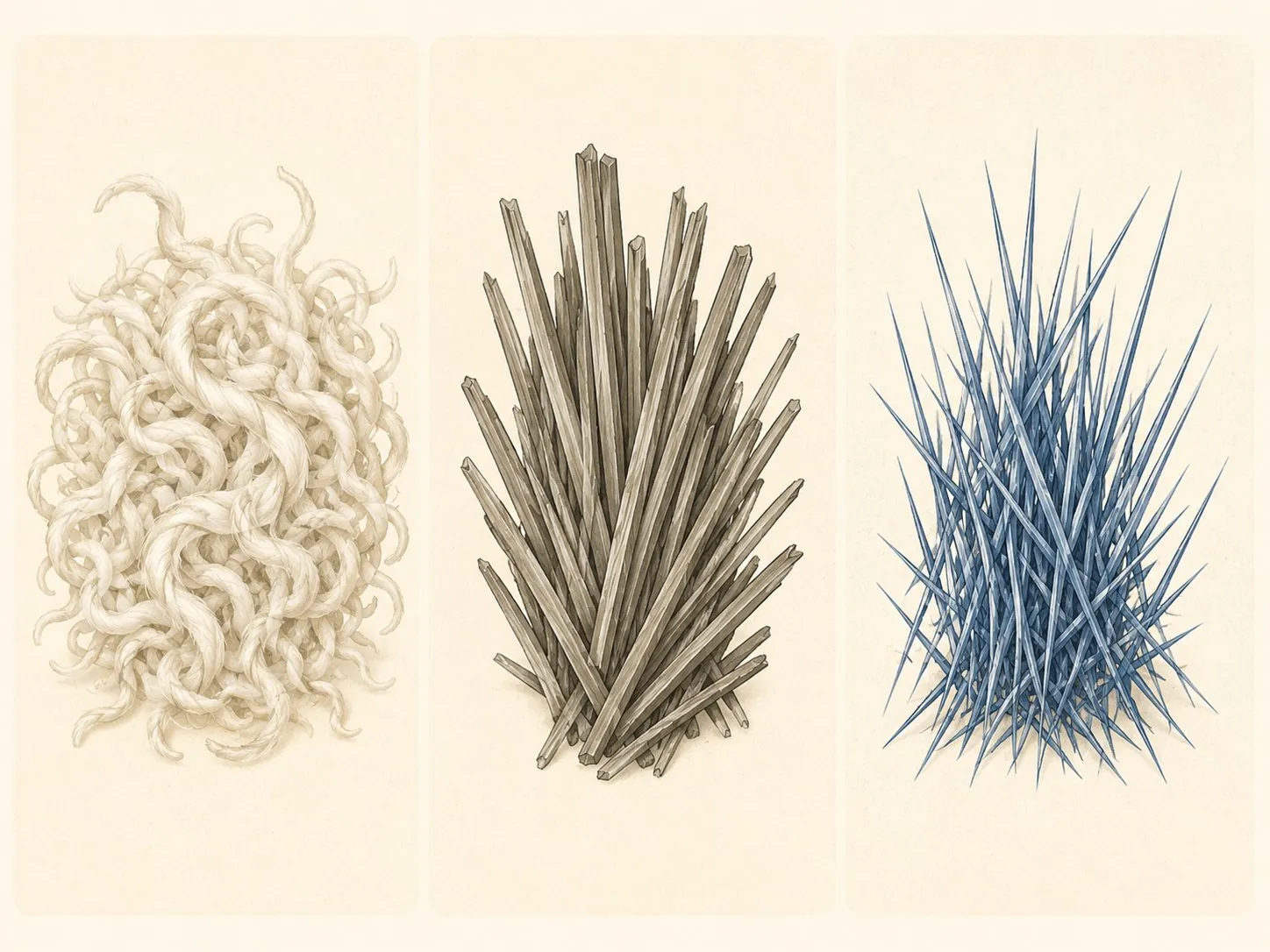
In its raw mined form, asbestos is a fibrous mineral that splits into long, hair-like strands. Chrysotile (white asbestos) appears as soft, curly, off-white fibres reminiscent of cotton wool or candyfloss. Amosite (brown asbestos) has straight, harsher, brown-grey needles. Crocidolite (blue asbestos) is similar in fibre shape to amosite but with a distinctly blue-grey tint when seen in bulk.
You won't normally see raw asbestos in a building. What you'll see are products made with asbestos — cement sheets, boards, tiles, lagging, sprays, papers, ropes — where the fibres are bound into another material. The exception is loose-fill insulation, which we'll come to, and that's the most dangerous category precisely because the fibres are loose.
Asbestos cement: sheets, roofs, pipes
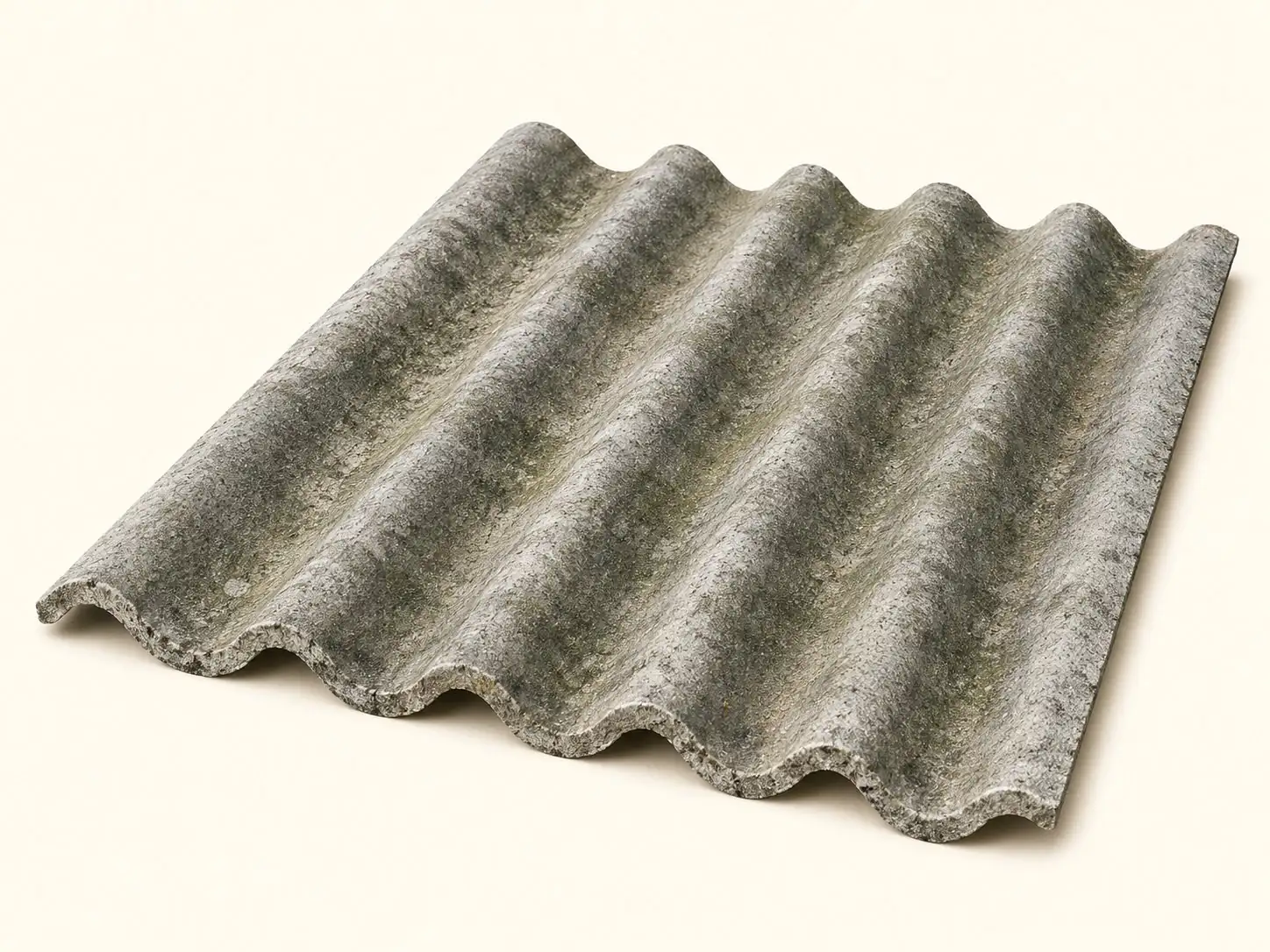
The single most common asbestos material in UK buildings, by volume, is asbestos cement. It looks like ordinary grey cement — because it is ordinary cement, with chrysotile (and sometimes amosite or crocidolite) added at typically 10 to 25 per cent by weight as a reinforcing fibre.
You'll find it as:
- Corrugated roof sheets on garages, sheds, outbuildings, agricultural and industrial buildings. The classic profile is a wavy grey or weathered grey-green sheet, sometimes painted. Look for the characteristic ridge pattern and the slight flexibility-but-not-quite-bend of the sheet.
- Flat sheets used for soffits, eaves, weatherboarding, and behind-fire panels.
- Downpipes, gutters, and rainwater goods — grey, sometimes painted black or white, often more brittle than modern uPVC equivalents and prone to cracking.
- Soil pipes and cold water tanks in lofts.
- Flues from gas boilers and solid-fuel stoves, both internal and external runs.
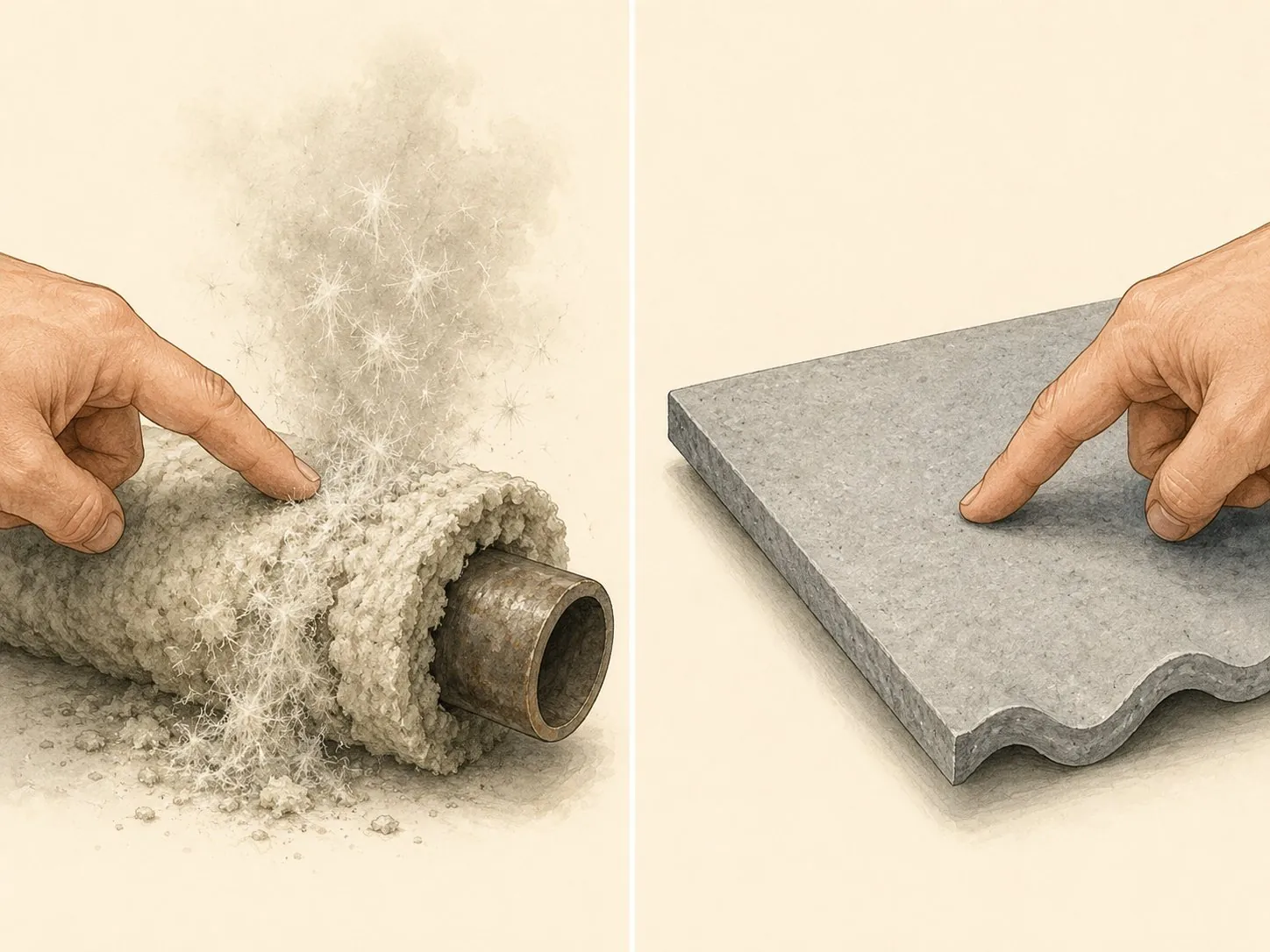
Asbestos cement is non-friable in good condition — the fibres are locked into the matrix and don't release readily. The risk arises when sheets are broken, cut with power tools, drilled, weather-damaged to the point of crumbling, or demolished without proper precautions.
Asbestos insulating board (AIB)
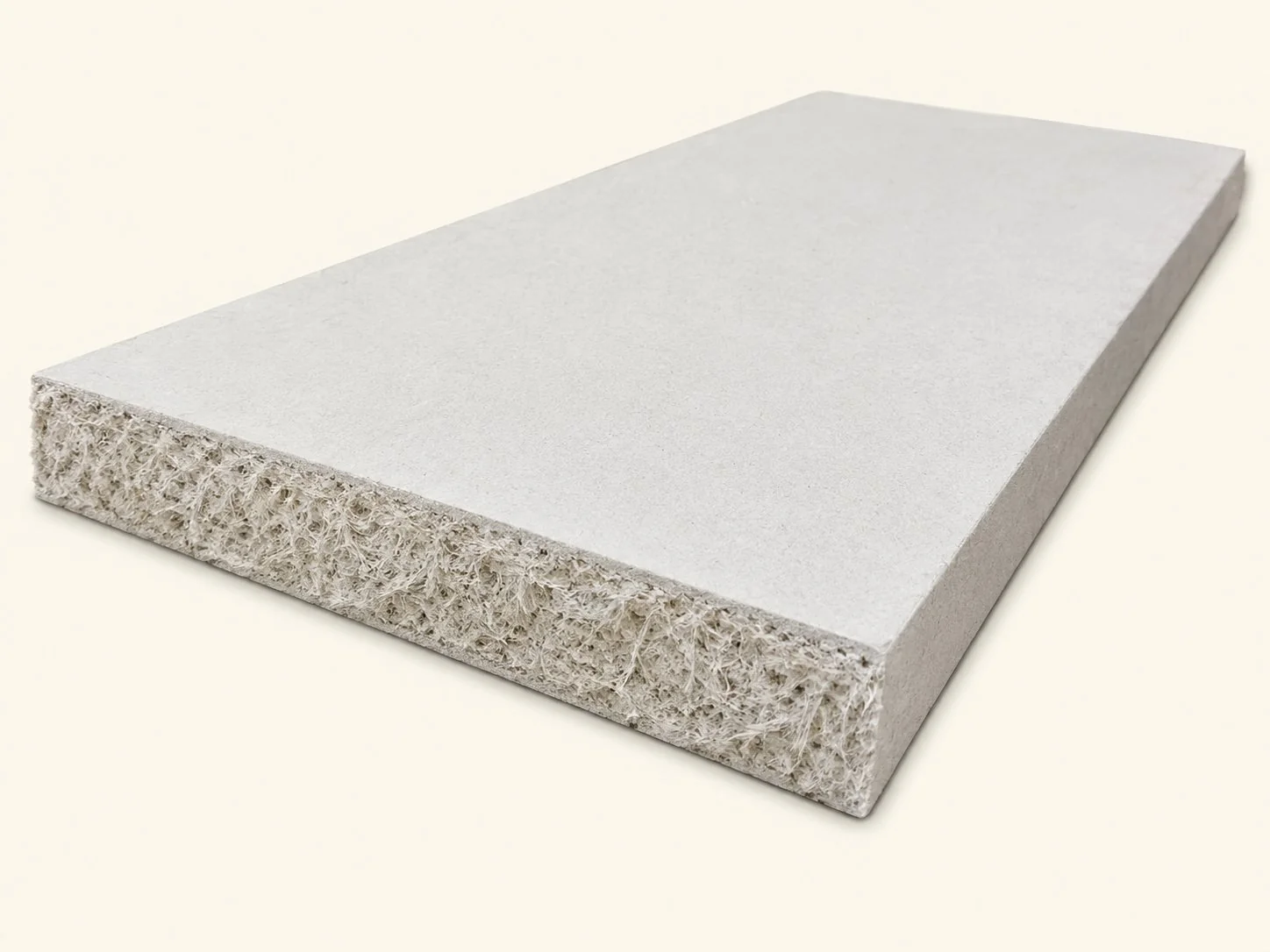
AIB is one of the more hazardous building materials you'll encounter, partly because it's widespread and partly because it's moderately friable — it releases fibres more easily than asbestos cement when worked on. It typically contained 15 to 40 per cent amosite and was used extensively from the 1950s into the 1980s.
It looks like a fibrous-feeling grey or off-white board, slightly softer than fibre cement, and is found in:
- Ceiling tiles, especially in suspended-ceiling grids
- Wall panels and partition boards
- The lining of fire doors and behind fire surrounds
- Soffits and overhang panels
- Service riser cupboards and around boilers
- Panels behind electrical fuse boxes and switchgear
AIB and modern equivalents (gypsum board, mineral fibre board) can be very hard to tell apart by eye. A surveyor will look for clues like the texture of the cut edge, the weight, and the way it sounds when tapped, but laboratory analysis is what confirms it.
Pipe lagging and thermal insulation
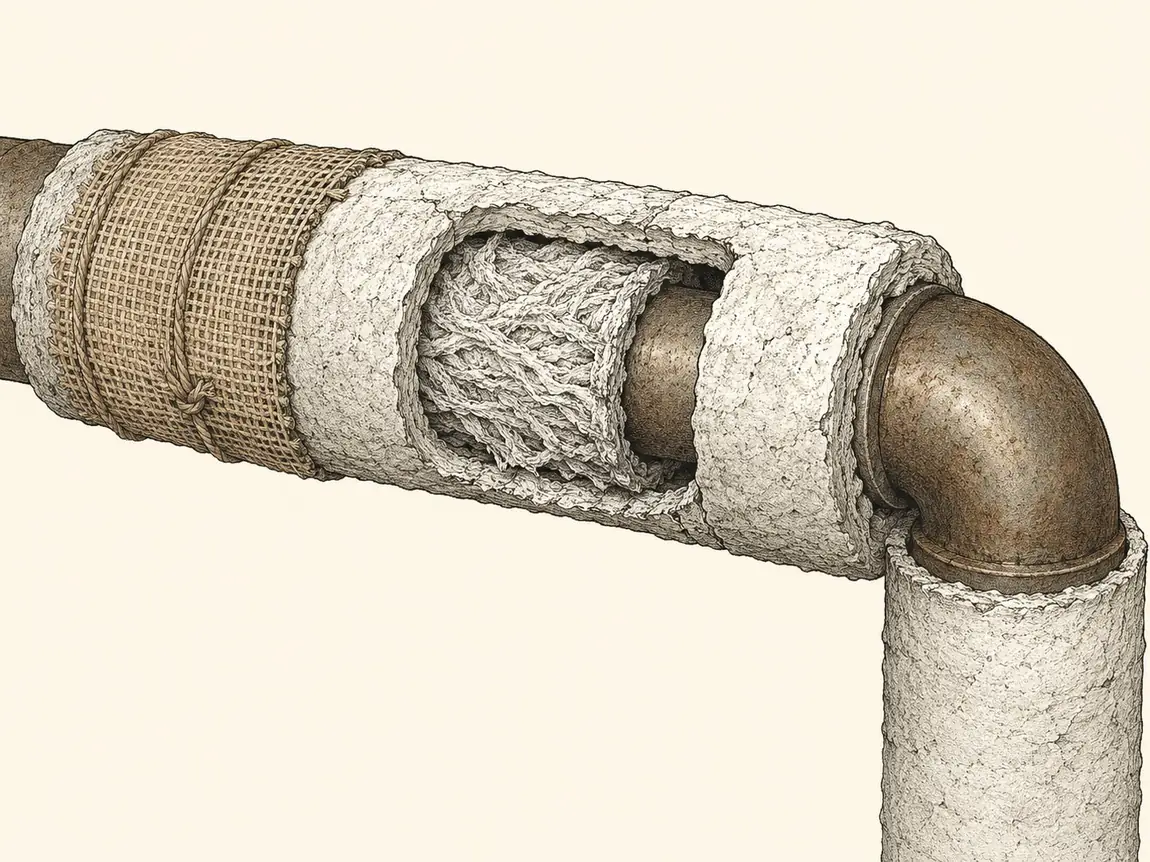
Asbestos was widely used to insulate pipes, boilers, calorifiers, and hot-water cylinders, particularly in commercial, industrial, and public buildings. The material was usually applied wet and shaped around the pipe, then sometimes wrapped in a hessian or cotton cloth and painted.
Lagging is one of the highest-risk materials you can encounter because it's highly friable — a knock with a tool can release a visible cloud of fibres. It typically appears as:
- A thick, plaster-like coating on heating or steam pipes, sometimes wrapped in cloth or canvas
- White or grey crusty material with a fibrous interior, usually painted
- Pipe sections at boiler rooms, plant rooms, basements, and roof spaces
- Residues stuck to brickwork or in ducts where the lagging itself has been partially removed
If you suspect pipe lagging is asbestos, do not touch, scrape, brush, or attempt to repair it. Work on lagging is licensed asbestos work in nearly all cases and must be done by a contractor licensed by the HSE.
Sprayed coatings
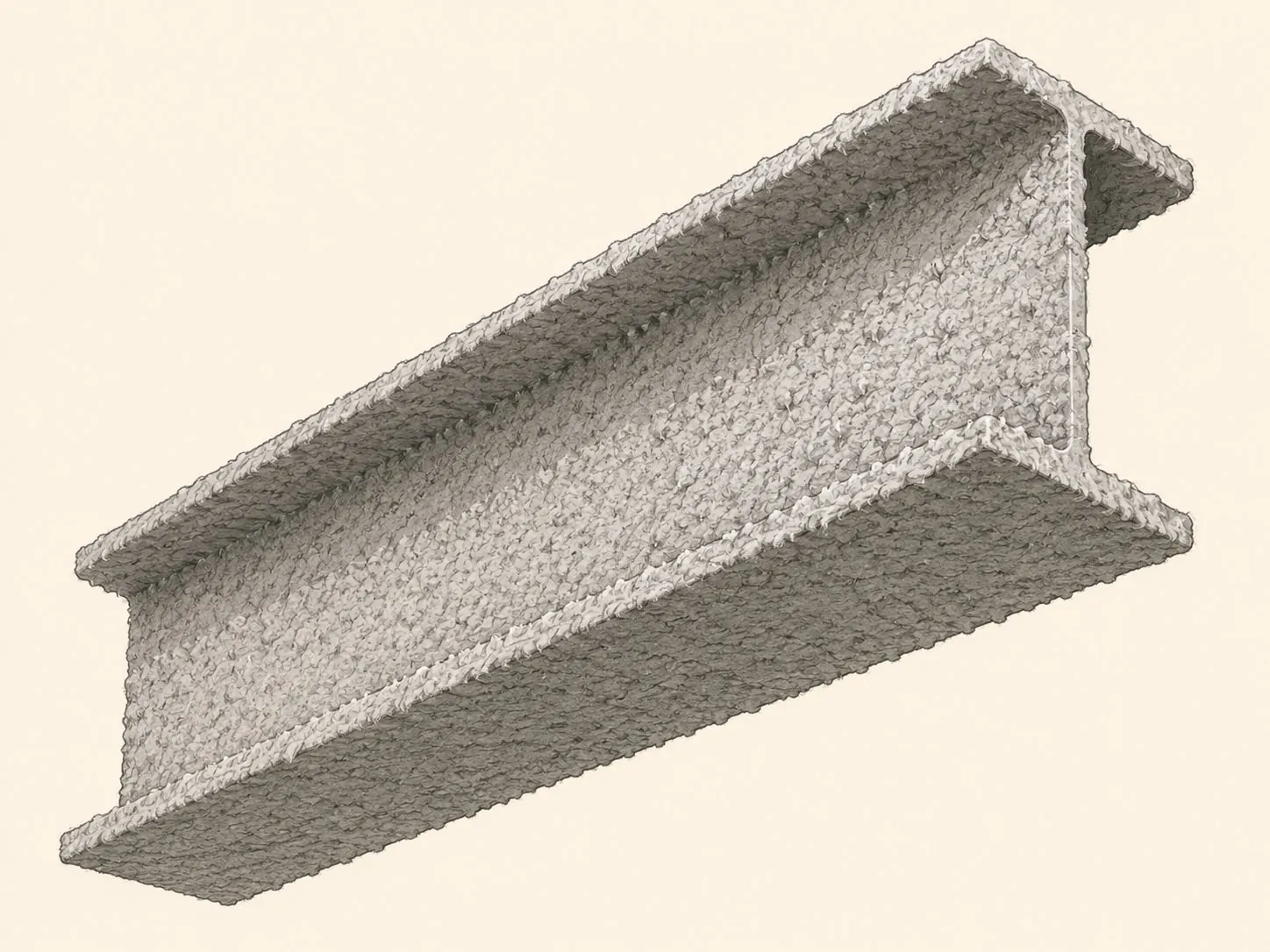
Limpet spray and other sprayed asbestos coatings were applied to structural steel, the underside of concrete floors, and ceilings in commercial buildings from the 1940s to the late 1970s. They were used for fire protection and thermal insulation.
Visually, sprayed coatings have a textured, rough, almost popcorn-like surface — fibrous and clearly not a smooth paint or plaster finish. The colour ranges from grey to white to off-white, sometimes painted over. They're often visible in suspended ceiling voids, on the underside of stairs, behind suspended ceiling panels, and in the soffits of public buildings.
Sprayed coatings are among the most dangerous asbestos materials because of how readily they release fibres when disturbed. Any work on them is licensed asbestos work.
Ceiling tiles

Two distinct categories appear in UK ceilings.
AIB ceiling tiles, as covered above, are the higher-risk type. They sit in suspended ceiling grids in offices, schools, and public buildings, and look like off-white or grey fibrous-textured boards typically 600mm square.
Bitumen or vinyl ceiling tiles were sometimes used in domestic settings. These are stiffer, often with a pattern or moulded texture, and can also contain chrysotile.
The clearest way to distinguish AIB from modern mineral fibre tiles is to look at the edge of a damaged tile. AIB tends to have a tighter, harder fibre structure than the soft mineral wool of modern tiles. But that's a surveyor's eye, not a homeowner's, and sampling is the right call.
Floor tiles and floor coverings
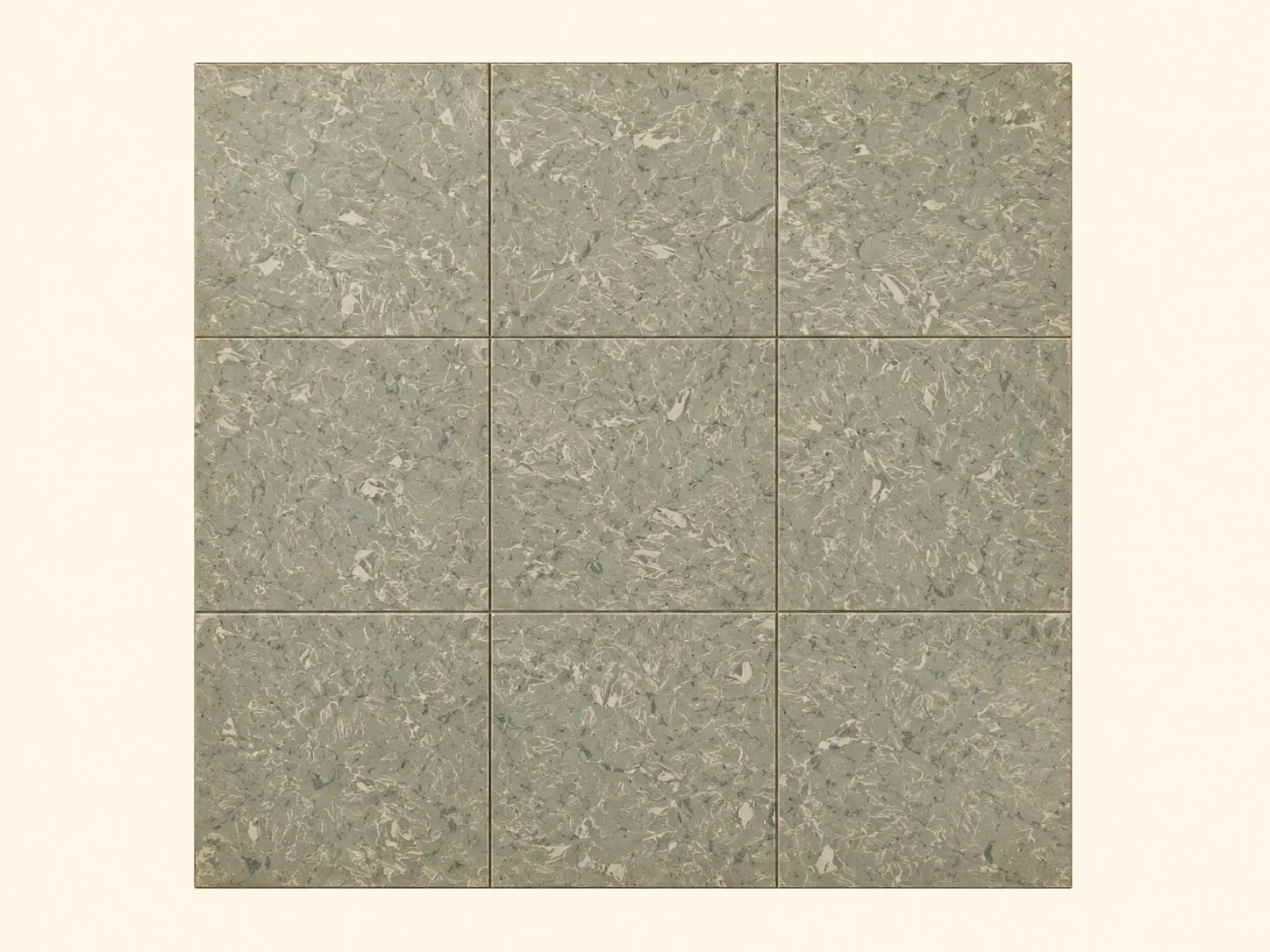
Asbestos was added to PVC and thermoplastic floor tiles, stair nosings, sheet vinyl, and the screed materials underneath. The tiles look like normal vinyl flooring — often 9 inches square, in marbled or speckled patterns, in browns, greens, greys, or pale pastels.
The adhesive matters too. Black bitumen mastic — the tar-like glue used to fix many vinyl tiles — frequently contained chrysotile, and some tiles had a paper backing that was nearly pure asbestos. We cover this in detail in our guide to identifying asbestos floor tiles.
Artex and textured coatings
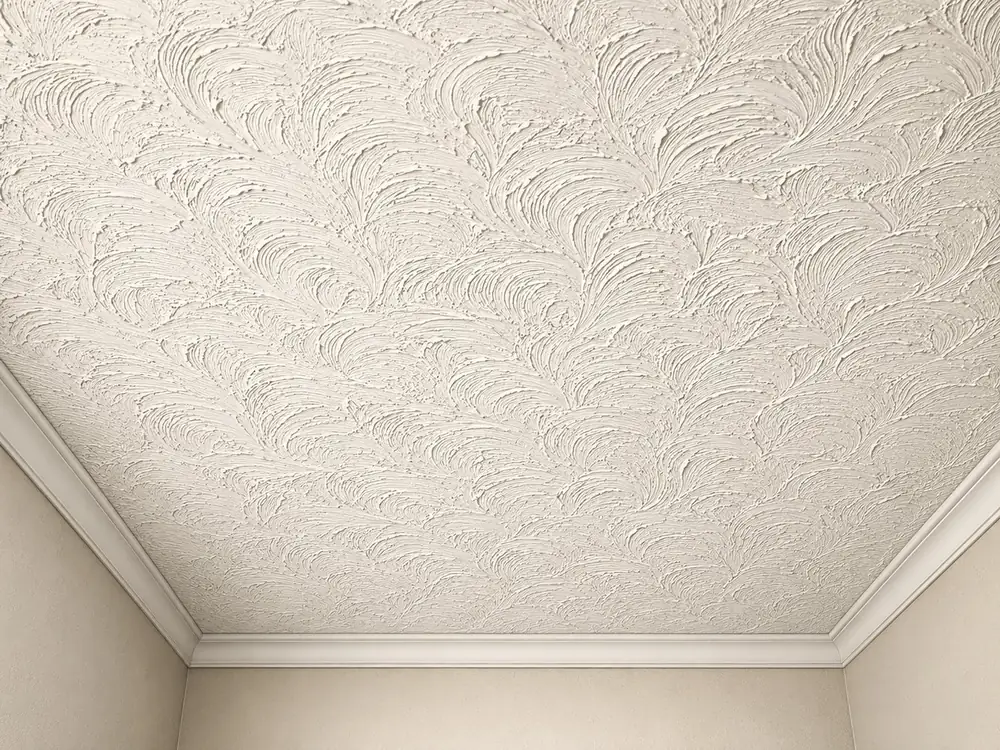
Decorative textured coatings on walls and especially ceilings — the swirled, stippled, or peaked finishes popular in UK homes from the 1960s into the 1980s — frequently contained chrysotile, typically at a few per cent by weight. Artex is the most familiar brand name, used so widely that "Artex" is often treated as a generic description of the finish.
Asbestos in textured coatings is bound into the plaster matrix and doesn't release at meaningful levels in normal use. The risk arises when someone tries to sand it flat, steam it off, or scrape it before redecorating. That's when fibre release happens.
Visually, textured coatings can look like:
- The classic swirl-and-peak pattern on ceilings ("stippled" or "stomped")
- A flat plaster surface with a coarse texture
- A heavy stipple-roller finish
- Decorative cornices and ceiling roses
If your home was built or refurbished before about 1985 and has textured ceilings, treat the coating as presumed asbestos until tested. The presumption is what HSE guidance recommends, and it costs you nothing if you're not planning to disturb it.
Rope seals, gaskets, and asbestos paper
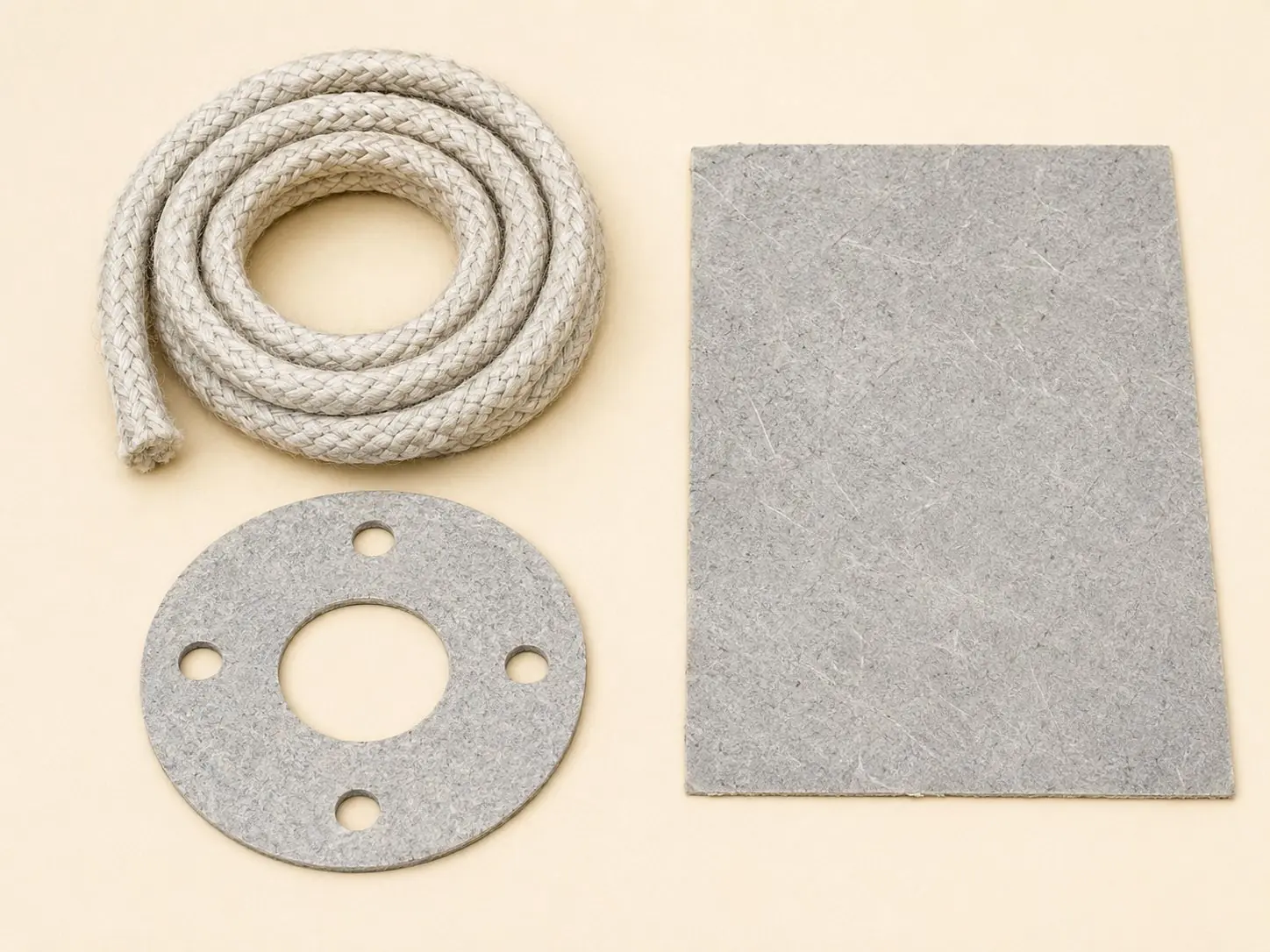
Asbestos was woven into rope and braid for use as door seals on stoves, ovens, kilns, and boilers, as gaskets between flanged pipe joints, and as insulation around electrical conductors. Asbestos paper was used as a backing layer in flooring, as a wrap around heating pipes, and as a heat-resistant insert in countless products.
Visually, asbestos rope looks white, off-white, or grey, with a coarse braided or woven appearance. Asbestos paper looks like grey or white cardboard, sometimes with a fibrous edge when torn. Both are mid-friability — they release fibres more readily than cement but less than loose-fill or sprayed coatings.
Loose-fill insulation

This is the worst category. Loose-fill asbestos was used to insulate lofts, fill cavity walls, pack around cables, and provide sound insulation between floors. It's essentially pure asbestos fibre, usually amosite or a mix, blown or poured into the cavity.
It looks like a loose, fluffy, candyfloss-like material — usually blue-grey or off-white, sometimes with a slightly oily texture. It moves easily; a gentle draught can disturb it. The fibre release potential is the highest of any asbestos material you'll encounter, and any work on loose-fill is licensed asbestos work without exception.
Loose-fill is relatively rare now because most of it has been identified and removed over the past forty years, but it does still turn up in older loft spaces and in cavity walls of certain mid-century social housing builds. If you lift a loft hatch and see a grey, fluffy material that doesn't look like modern mineral wool, stop work, close the hatch, and call a licensed surveyor.
How professional sampling and testing actually works
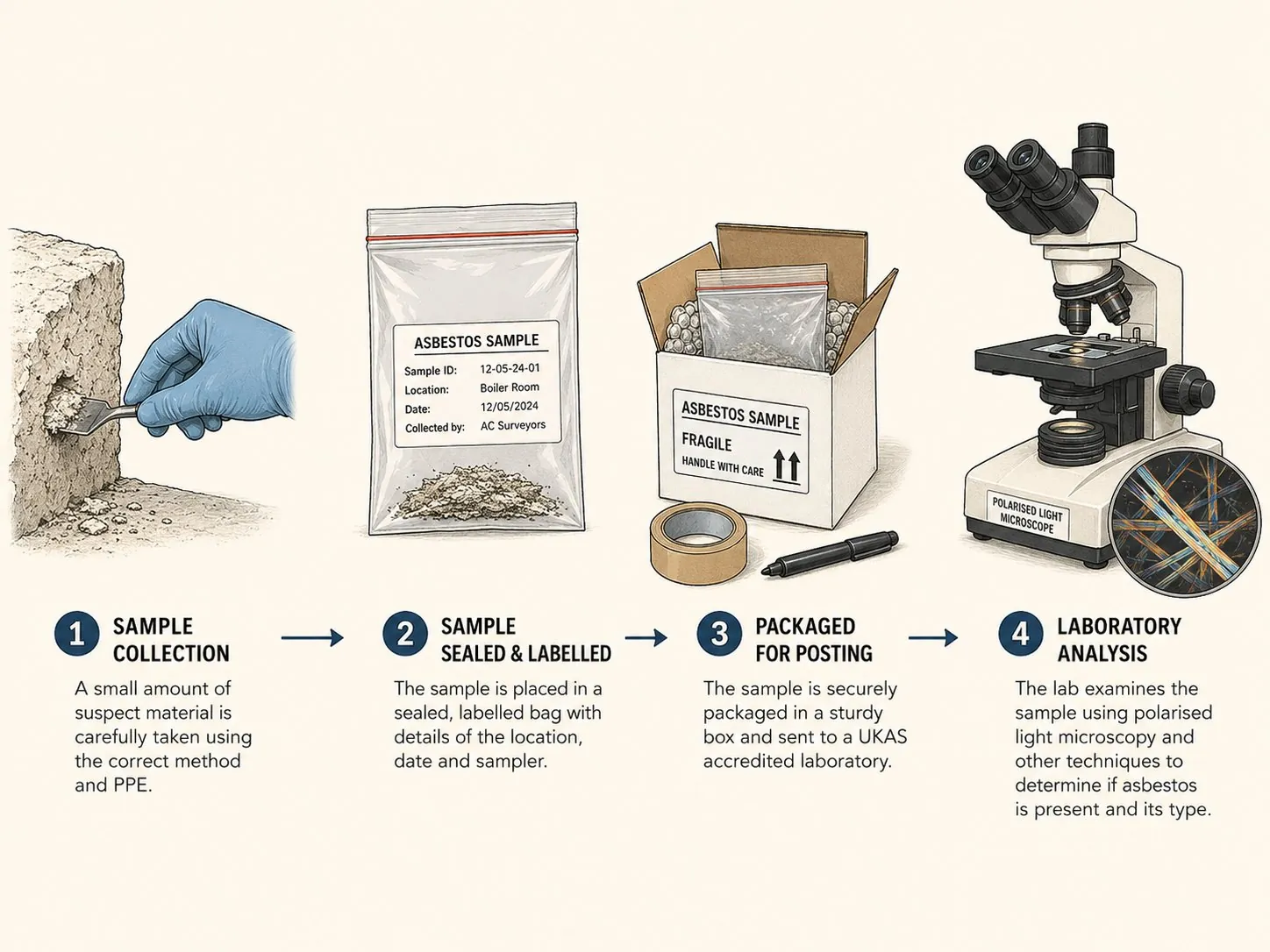
A surveyor takes a small physical sample of the suspect material — typically a few grams — wets it down to suppress fibre release, places it in a labelled sample bag, and sends it to a laboratory accredited by UKAS to ISO/IEC 17025. The standard analytical method is polarised light microscopy (PLM), which can identify the specific type of asbestos fibre and the approximate percentage by weight.
Results typically come back within a few working days. A positive result will state the asbestos type (chrysotile, amosite, crocidolite, or one of the rarer types) and the material it was found in. A negative result will say "no asbestos detected" — which is the form of words used because absolute certainty isn't possible from a single sample.
Home testing kits exist and broadly work the same way: you take the sample, send it to a lab, and get a result. The main caveat is sample technique — taking the sample without releasing fibres is a skill, and if you're not trained, hiring a competent person to do it is the safer option.
What to do if you suspect asbestos
The default is straightforward: stop, don't touch, presume it's asbestos, and find out for certain before any further work. We have a separate guide on the steps to take if you discover or accidentally disturb asbestos.
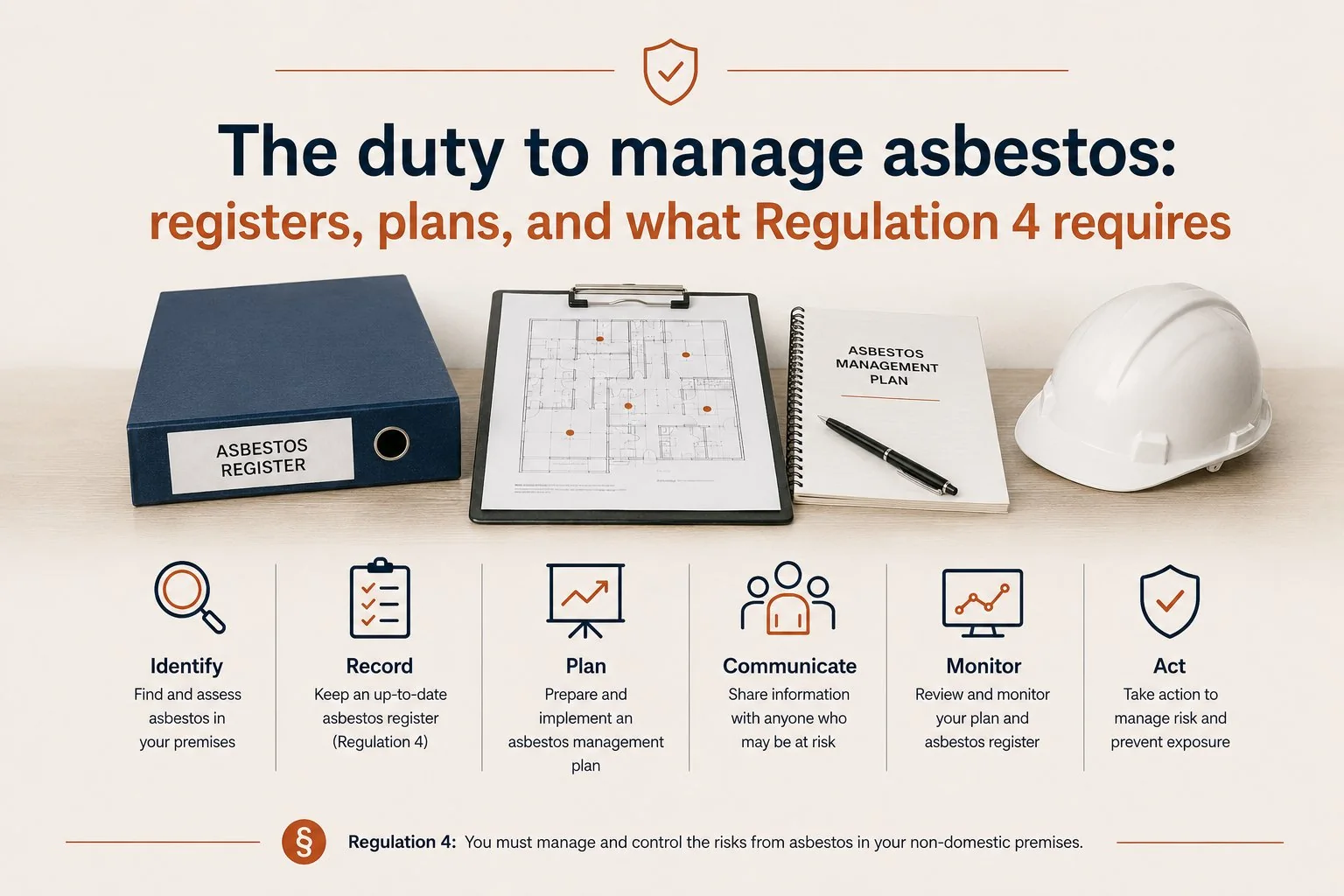
In a domestic property, the responsibility for managing what you've found is yours as the homeowner. In a workplace or non-domestic premises, the duty holder has obligations under the Control of Asbestos Regulations 2012 to manage the risk and update their asbestos register accordingly.

Frequently asked questions
Can asbestos be identified by colour?
No. The colour names (white, brown, blue) refer to the raw mineral, not the material made from it. Once asbestos is bound into cement, vinyl, or board, the colour of the original fibre is irrelevant — the material takes the colour of its matrix.
What does damaged asbestos look like?
Friable damage releases visible fibres — a fluffy grey or white dust on surfaces near the damage, fibres airborne in light beams, or a fibrous core exposed where a clean break has occurred in lagging or sprayed coatings. Damaged cement looks like crumbling, weathered grey concrete with visible mineral fibres in the cracks.
Are asbestos testing kits reliable?
Reliable, yes, when they post the sample to a UKAS-accredited lab. The variable is the sampling itself. If you take a poor sample — too small, contaminated, or not fully representative of the material — the result reflects only what was in the bag. Professional sampling reduces that risk.
Why does my house feel safe but I should still treat it as asbestos?
Because asbestos in good condition is genuinely low-risk while undisturbed. The "presume until tested" approach isn't fear; it's discipline for when work is planned. If you have no plans to drill, cut, lift, or otherwise disturb the suspect material, leaving it alone is a legitimate management strategy.
Can asbestos be in plaster or paint?
Yes. Decorative textured coatings (Artex and similar) often contained chrysotile, and some specialist paints from the same era did too. Plaster used as a smooth wall finish is much less likely to contain asbestos, though some skim coats from the asbestos era did include trace amounts.
Does asbestos have a smell?
No. Asbestos fibres are odourless. If you smell something musty in a loft or basement near suspect insulation, you're probably smelling something else — damp, mould, or the ageing of the binder material.
Will asbestos always be in homes built before 2000?
Not always — but you should assume it might be unless evidence proves otherwise. The HSE position is that asbestos materials must be presumed present in pre-2000 buildings unless there is robust evidence (a clean refurbishment survey, original drawings showing alternative materials) that rules it out.
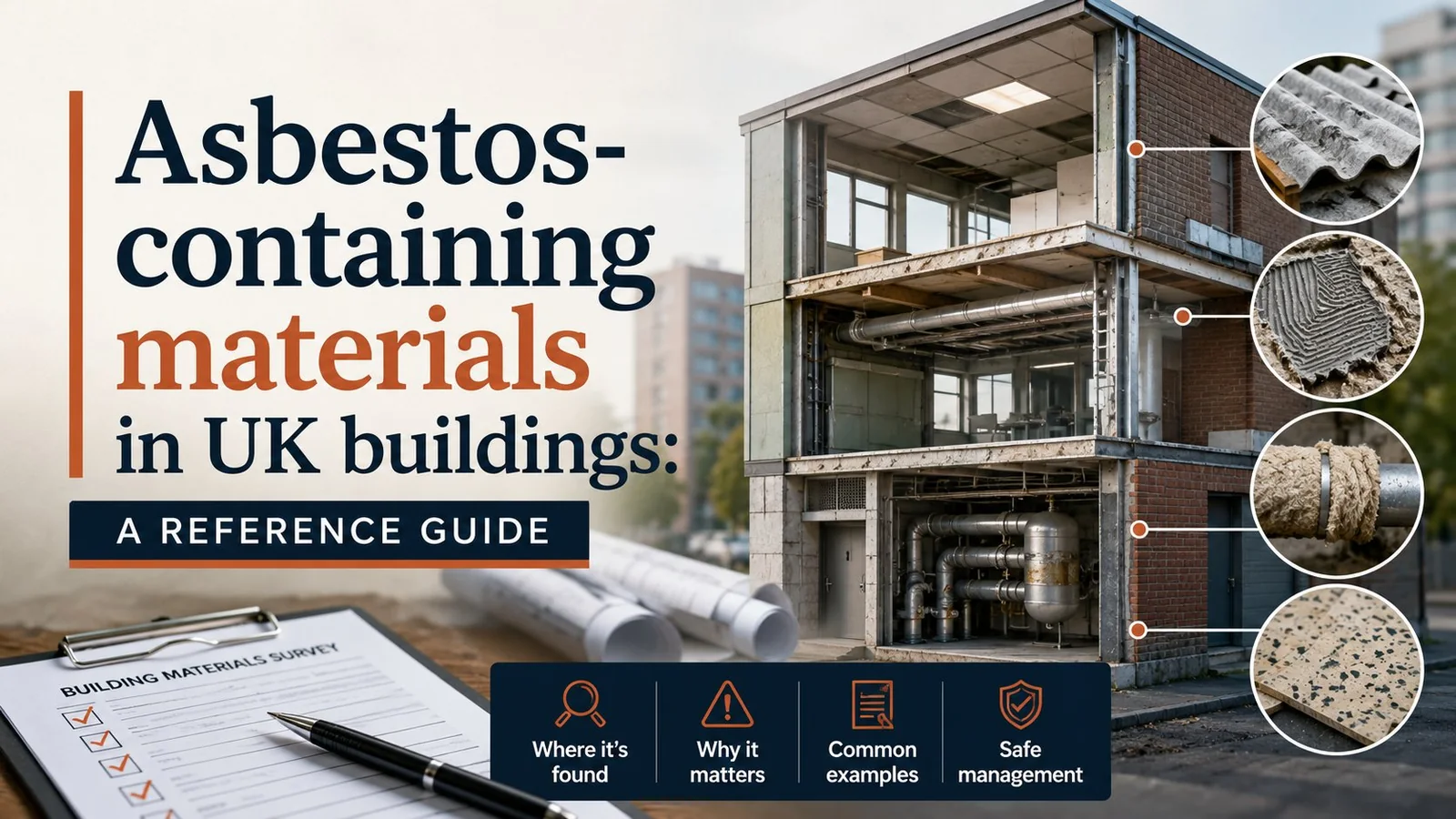
The materials covered above are the categories you're most likely to come across in UK homes and workplaces. For a deeper material-by-material breakdown — including locations to check, year ranges, and risk levels — see our comprehensive guide to asbestos-containing materials in UK buildings. For tradespeople and supervisors whose work could foreseeably disturb asbestos, the legal training requirement is set out in Regulation 10 of the Control of Asbestos Regulations 2012 — our UKATA-approved Asbestos Awareness Course covers the required syllabus. And if you've already disturbed something you now think might be asbestos, see what to do if you've been exposed to asbestos.
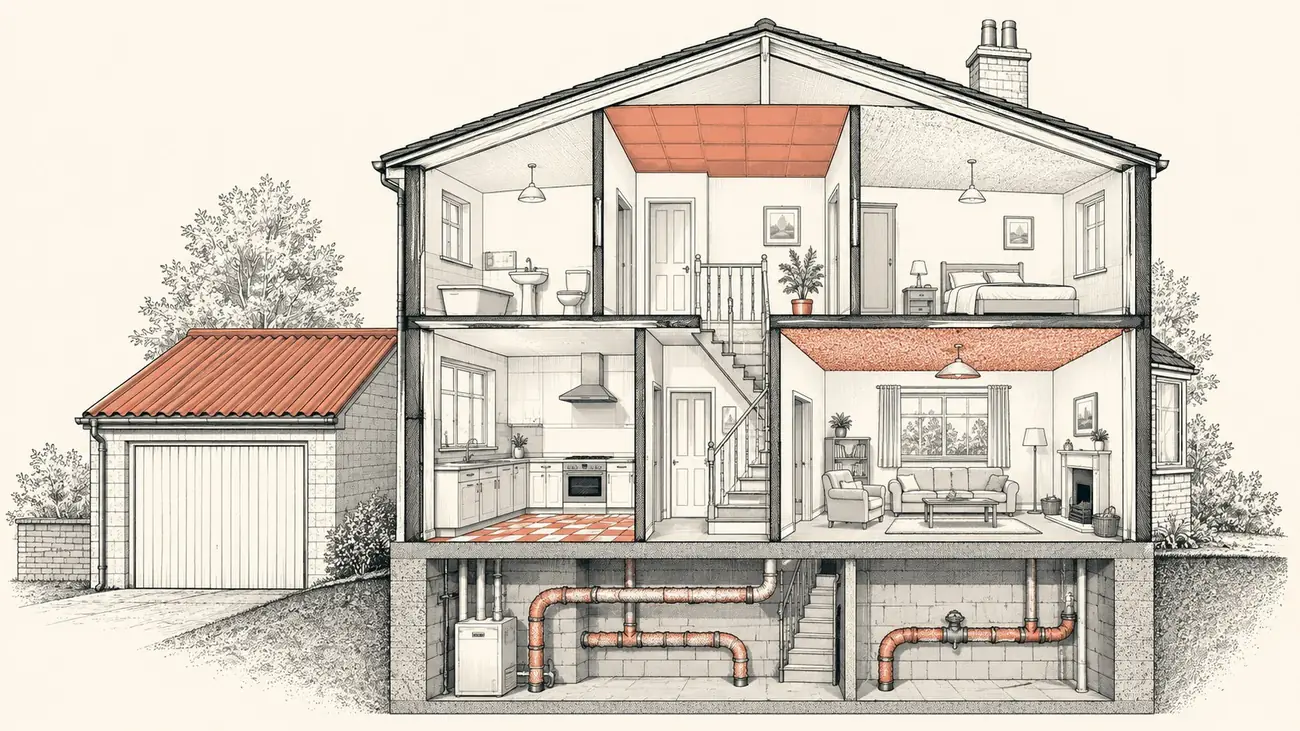
For the official HSE reference, the asbestos location diagrams on the Health and Safety Executive site map common ACM locations in a typical domestic and commercial property.