
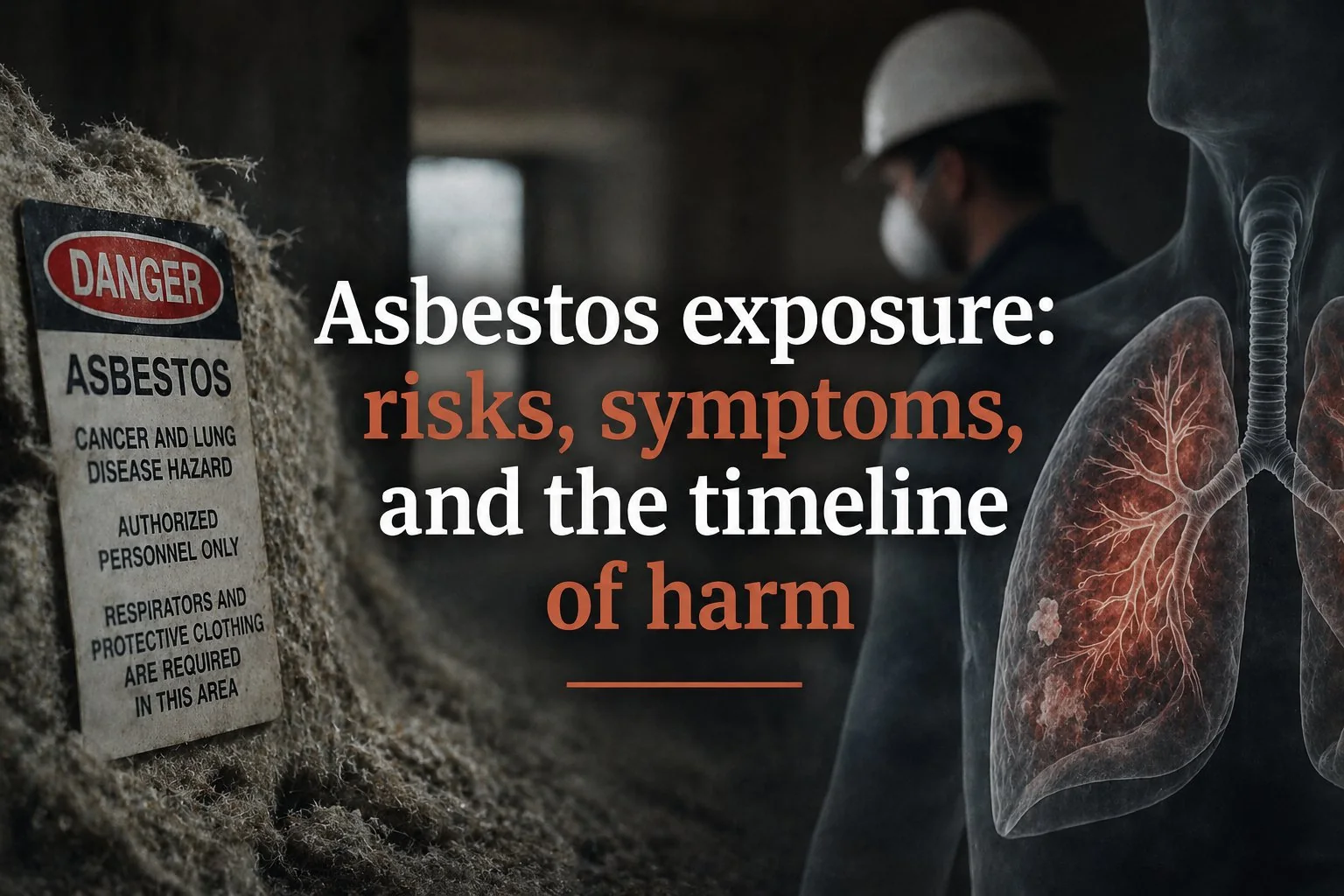
If you've been exposed to asbestos and you're reading this, the first thing worth saying is that exposure does not equal disease. Most people who breathe in asbestos fibres at some point in their working lives — and that's a substantial fraction of the UK adult population — don't go on to develop an asbestos-related illness. Risk rises with cumulative exposure, with the type of fibre, with how long after exposure the body has been monitored, and (for lung cancer specifically) with smoking history. A single brief contact in a well-ventilated environment is at the low end of that scale.
That said, asbestos is a Group 1 carcinogen, classified that way by the International Agency for Research on Cancer because the evidence linking it to several cancers and to non-cancerous lung disease is overwhelming. The diseases it causes have unusually long latency periods, which is why people exposed in the 1970s and 80s are being diagnosed now. This page sets out what counts as exposure, the four main diseases, what their symptoms look like, what you should do if you think you've been exposed, and the compensation pathways that exist in the UK.
What counts as asbestos exposure
The primary route of harm is inhalation. Asbestos fibres are small enough — typically a few micrometres in length — to bypass the upper airway defences and reach the deep tissue of the lungs, where they can lodge for decades. The body's clearance mechanisms can remove some fibres, particularly chrysotile, but a fraction of the inhaled load remains.
The other potential routes are far less significant in disease terms. The World Health Organization position is that there is no consistent evidence that ingesting asbestos fibres — through contaminated water, for example — causes harm. Skin contact can cause local irritation but isn't a route to systemic disease.
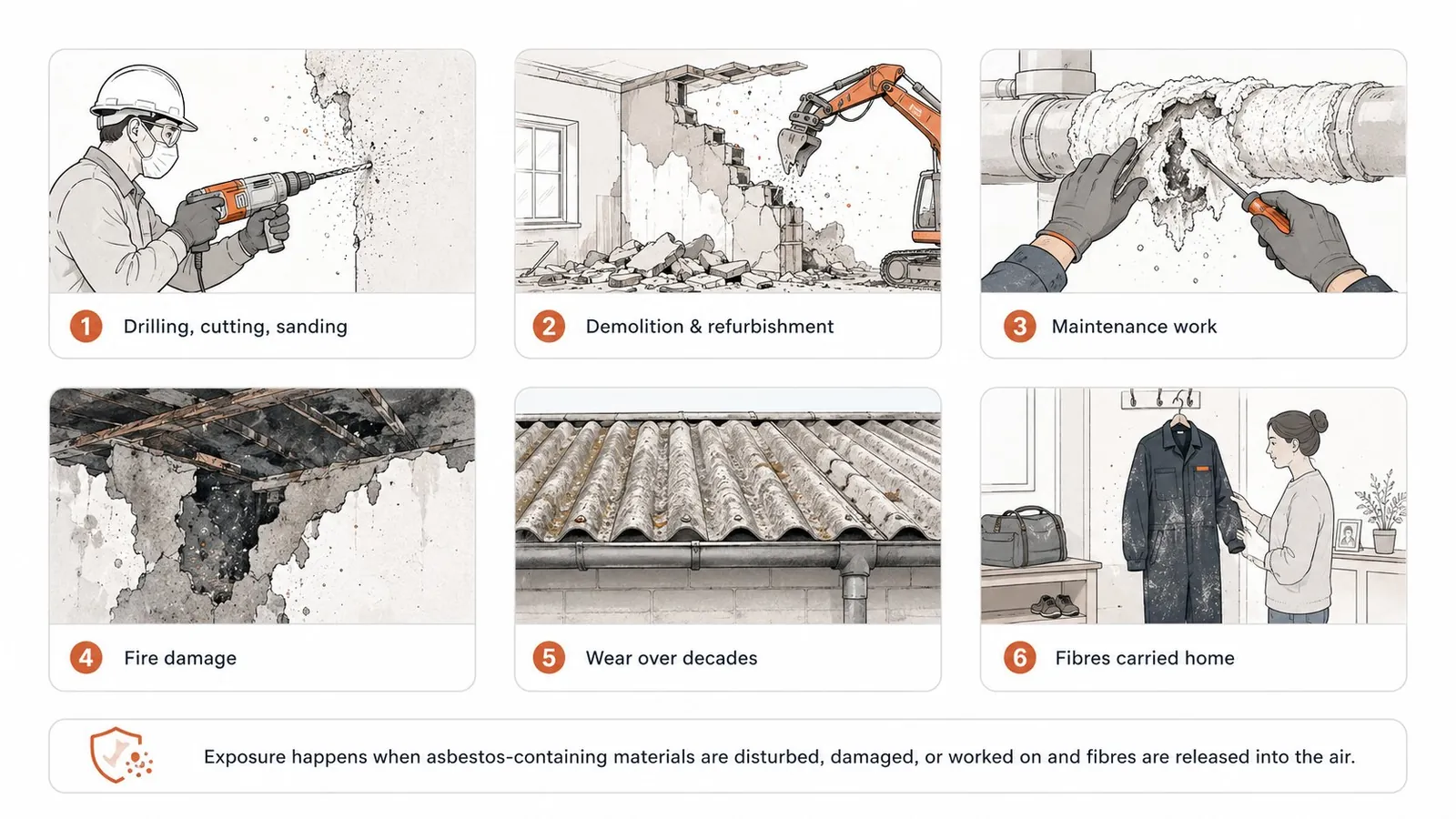
Exposure happens when asbestos-containing materials are disturbed, damaged, or worked on in a way that releases fibres into the air. This includes:
- Mechanical disturbance: drilling, cutting, sanding, grinding, breaking
- Demolition or refurbishment of buildings containing asbestos
- Maintenance work that disturbs lagging, AIB, or sprayed coatings
- Fire damage to asbestos materials
- Wear and weathering of asbestos cement over decades
- Secondary exposure — fibres carried home on a worker's clothes and inhaled by family members
A single occasional exposure is fundamentally different from the daily, sustained, high-fibre-density exposure that historical asbestos workers experienced in shipyards and insulation factories. Both are risks; the scale is very different.
The latency period — why decades can pass
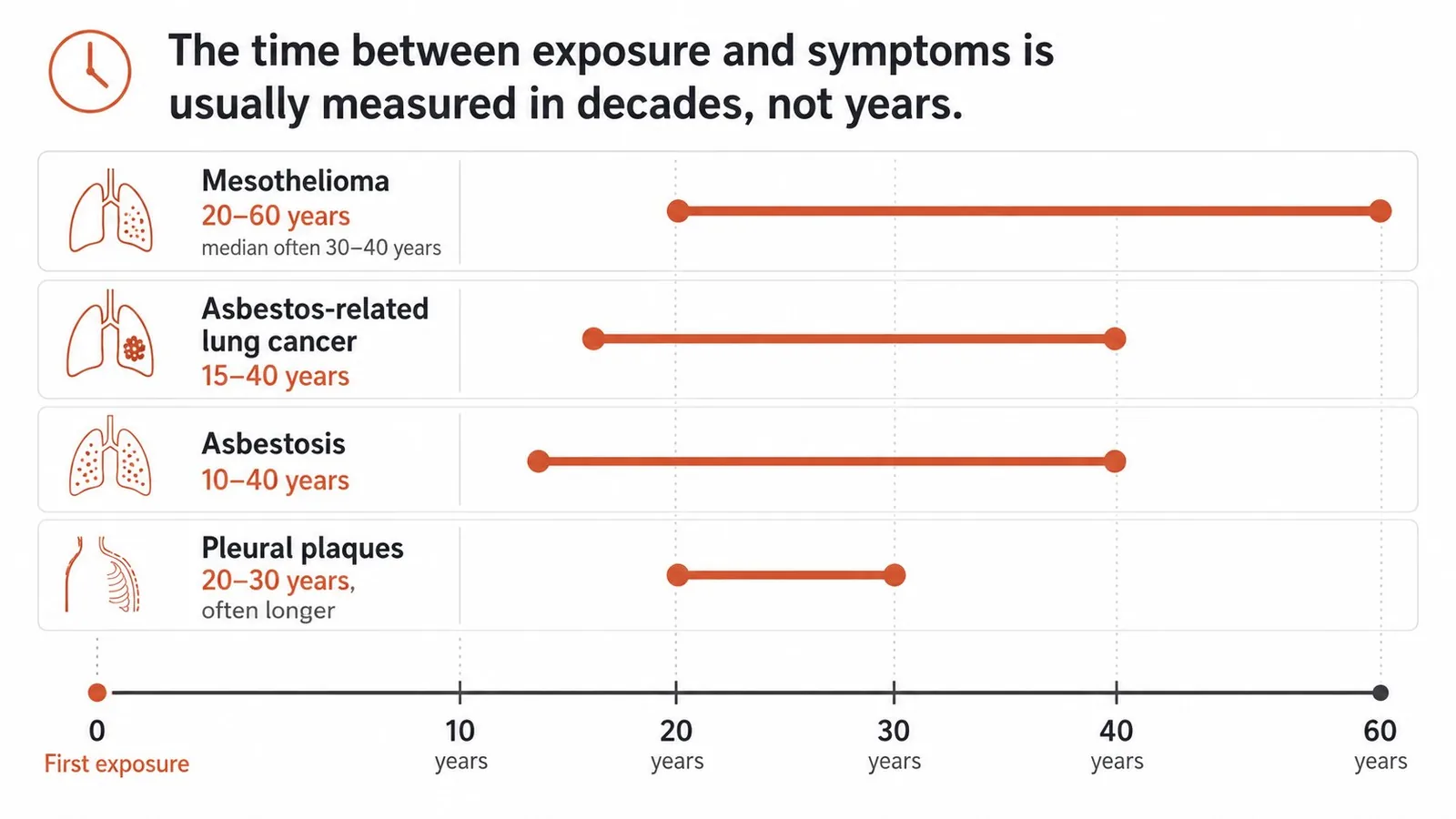
Asbestos-related diseases share one of the longest latency periods of any occupational disease. The time between first exposure and onset of symptoms is typically measured in decades, not years.
The approximate ranges are:
- Mesothelioma: 20 to 60 years, with a median in many studies around 30 to 40 years
- Asbestos-related lung cancer: 15 to 40 years
- Asbestosis: 10 to 40 years
- Pleural plaques: 20 to 30 years, often longer
This long latency has two consequences. The first is that the asbestos-related disease being diagnosed today reflects exposure that happened a generation ago. The HSE's most recent statistics, published in 2026, record 2,146 mesothelioma deaths in 2024 — and the people who died were typically exposed in the 1960s and 70s when UK asbestos use was at its peak.
The second consequence is more uncomfortable. People exposed today won't know for decades whether the exposure has caused harm. There is no diagnostic test that can tell someone "you've been exposed and you'll develop disease" or "you've been exposed and you won't". Screening can detect early signs of pleural disease or fibrosis, but the absence of those signs at year ten doesn't rule out disease at year thirty.
Mesothelioma
Mesothelioma is a rare cancer that develops in the thin tissue lining the lungs (pleural mesothelioma), the abdomen (peritoneal mesothelioma), and very occasionally the heart (pericardial mesothelioma). It is almost exclusively caused by asbestos exposure — over 90 per cent of UK cases are linked to asbestos, according to NHS information.
The latency period is the longest of any asbestos disease, typically 20 to 60 years. By the time symptoms appear, the disease is usually already at an advanced stage, which is one of the reasons the prognosis remains difficult.
Pleural mesothelioma — the form that affects the lining of the lungs — accounts for the substantial majority of UK cases. Early symptoms include persistent cough, shortness of breath, chest pain that doesn't ease with rest, fatigue, and unexplained weight loss. Many of these symptoms overlap with much commoner conditions like pneumonia or chronic obstructive pulmonary disease, which is why mesothelioma is sometimes diagnosed late.
Peritoneal mesothelioma presents differently, with abdominal swelling, pain, changes in bowel habit, and weight loss.
Treatment options — chemotherapy, surgery, radiotherapy, immunotherapy, and combinations of these — have continued to develop, and prognosis has improved over the past two decades, but mesothelioma remains a serious diagnosis. The NHS page on mesothelioma is the appropriate first reference for anyone seeking medical information.
Asbestosis
Asbestosis is a chronic, progressive scarring (fibrosis) of the lung tissue caused by prolonged inhalation of asbestos fibres. Unlike mesothelioma, it isn't cancer — but it can be severely disabling and can progress over years even after exposure ends.
The latency period is typically 10 to 40 years. Asbestosis is most often seen in people who worked in heavily-exposed occupations during the asbestos era — shipbuilders, laggers, insulation workers, demolition workers — though it can develop from lower-exposure scenarios over long enough periods.
Symptoms typically include shortness of breath, particularly on exertion; a persistent dry cough; chest pain or tightness; fatigue; and over time, clubbing of the fingers and toes (a thickening and rounding of the fingertips that is a recognisable physical sign).
There is no cure for asbestosis. Treatment focuses on managing symptoms, slowing progression, preventing complications like infection, and supporting respiratory function. People with asbestosis also have an elevated risk of developing other asbestos-related diseases including mesothelioma and lung cancer.
The HSE statistics for 2024 record 503 deaths where asbestosis was mentioned on the death certificate but mesothelioma was not, indicating asbestosis itself as the cause.
Asbestos-related lung cancer
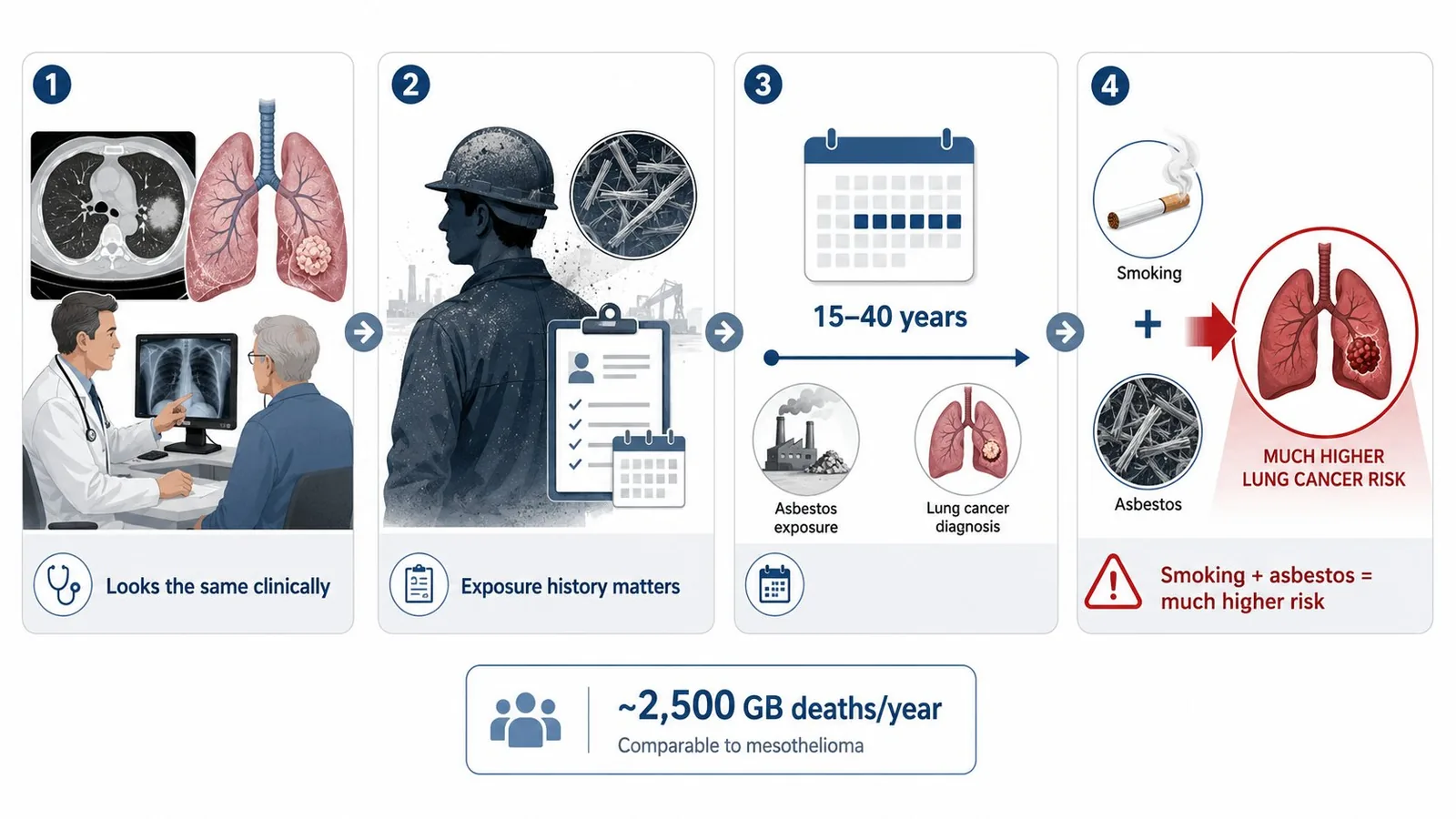
Lung cancer caused by asbestos exposure is, in clinical terms, indistinguishable from lung cancer caused by other agents. The cell types, symptoms, and treatments are the same. What makes it asbestos-related is the exposure history, not anything visible in the tumour itself.
The HSE estimates that there are currently over 2,000 asbestos-related lung cancer deaths in Great Britain each year — broadly comparable to the mesothelioma death toll. The proportion of all lung cancers attributable to asbestos in the UK is significant; lung cancer is one of the most common cancers in the UK after tobacco-related cancers, and asbestos is one of the most significant causes after tobacco itself.
Latency is typically 15 to 40 years.
The interaction between asbestos and smoking deserves particular attention. The two risks don't simply add together — they multiply. A smoker exposed to asbestos has a substantially higher risk of lung cancer than the sum of the smoking risk and the asbestos risk taken separately. This multiplicative interaction is well-established in the epidemiology. The practical implication is that asbestos-exposed workers who smoke have one of the highest occupational lung cancer risks of any group, and quitting smoking is one of the most effective ways to reduce that risk even years after exposure.
Pleural plaques and diffuse pleural thickening
These are the non-cancerous pleural changes that can develop after asbestos exposure.
Pleural plaques are areas of fibrous thickening on the parietal pleura — the membrane lining the inside of the chest wall. They develop slowly over 20 to 30 years after exposure, are usually painless, and don't typically affect breathing. They often appear on chest X-rays or CT scans as incidental findings. Plaques themselves are not pre-cancerous, but their presence indicates past asbestos exposure, which carries its own elevated risk for other asbestos diseases.
Diffuse pleural thickening is a more widespread thickening of the pleura that can affect lung function. It can cause shortness of breath and chest tightness, and unlike plaques, it can be progressive. It's distinct from pleural plaques both anatomically (it affects the visceral pleura) and clinically (it has functional consequences).
There's a legal point worth knowing about pleural plaques in the UK. In England and Wales, the House of Lords ruled in Rothwell v Chemical & Insulating Co Ltd [2007] that pleural plaques alone do not entitle the affected person to civil compensation, because plaques don't constitute "damage" in the legal sense that would support a personal injury claim. The position in Scotland and Northern Ireland is different — both jurisdictions have legislation allowing compensation for pleural plaques. This is one of the more frequently misunderstood points in popular writing on asbestos.
How much exposure is dangerous?
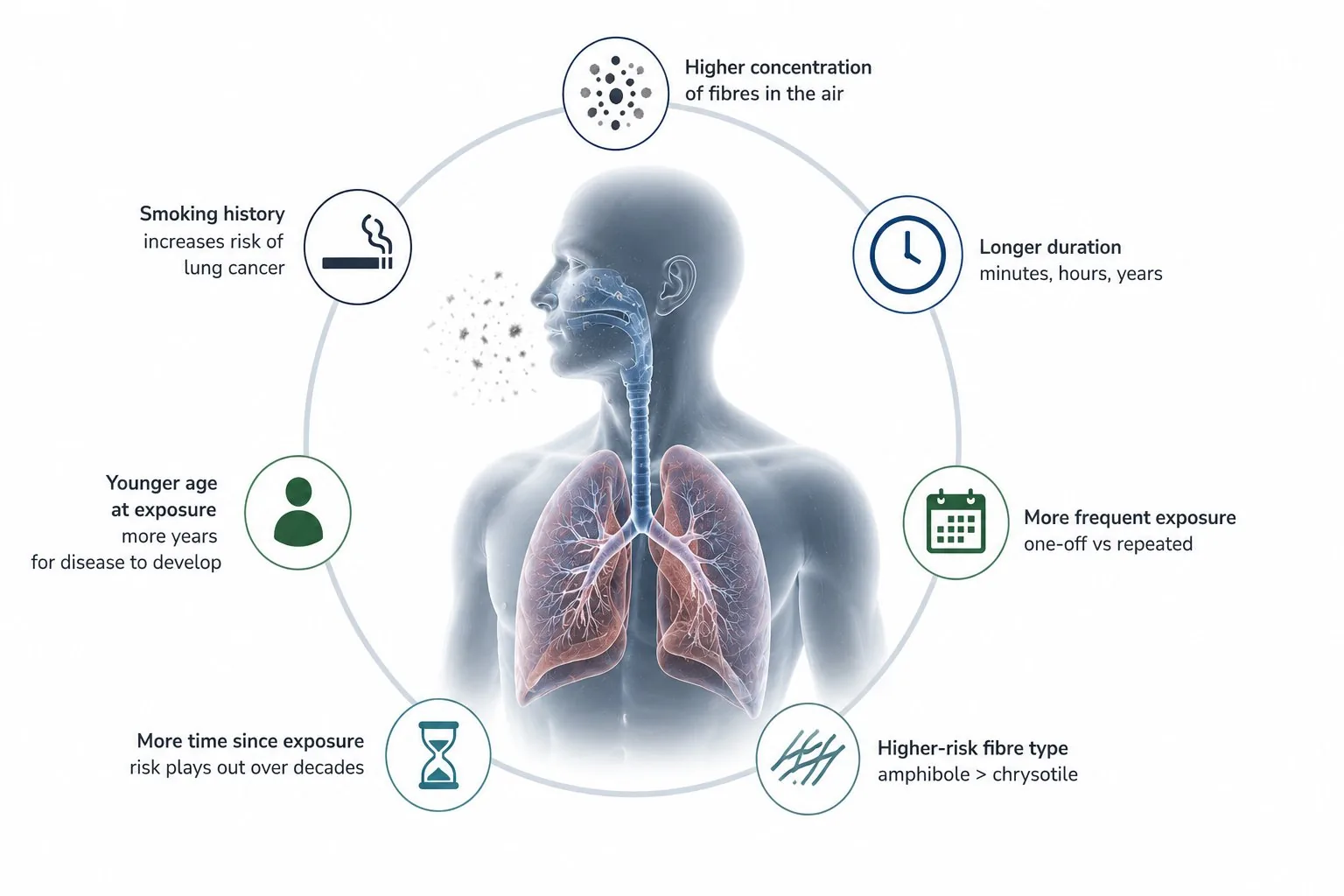
This is the question every asbestos page tries to answer and the honest response is: there is no proven safe threshold, but risk is broadly proportional to dose.
The dose factors that increase risk:
- Concentration of fibres in the air during exposure
- Duration of exposure — minutes, hours, years
- Frequency — one-off versus repeated
- Type of fibre — amphibole asbestos (crocidolite, amosite) carries higher per-fibre risk than chrysotile
- Time since exposure — disease risk plays out over decades
- Age at exposure — younger exposure means more years for disease to develop
- Smoking history — for lung cancer specifically
A one-off brief exposure in a well-ventilated environment, with no symptoms or visible distress, falls at the lower-risk end of that scale. Daily, sustained, high-density exposure for years falls at the higher end. Most exposures in modern UK life sit between those extremes.
The "no safe threshold" caveat matters but shouldn't be over-read. It's a regulatory and precautionary principle, not a statement that any exposure produces visible disease. Many people exposed to asbestos at moderate levels live full lives without developing any asbestos-related illness.
Secondary (take-home) exposure
One of the more difficult parts of asbestos epidemiology is the take-home exposure pathway. Asbestos workers in the mid-twentieth century routinely came home with fibres on their clothes, hair, and skin, where the fibres could be inhaled by family members during washing and ordinary contact.
Mesothelioma in spouses and children of asbestos workers — particularly women who laundered their husbands' work clothes — was an established pattern by the late twentieth century, and continues to be reflected in the disease statistics today. This is one reason modern asbestos regulations include decontamination requirements and prohibit workers from taking contaminated clothing home.
When to see your GP
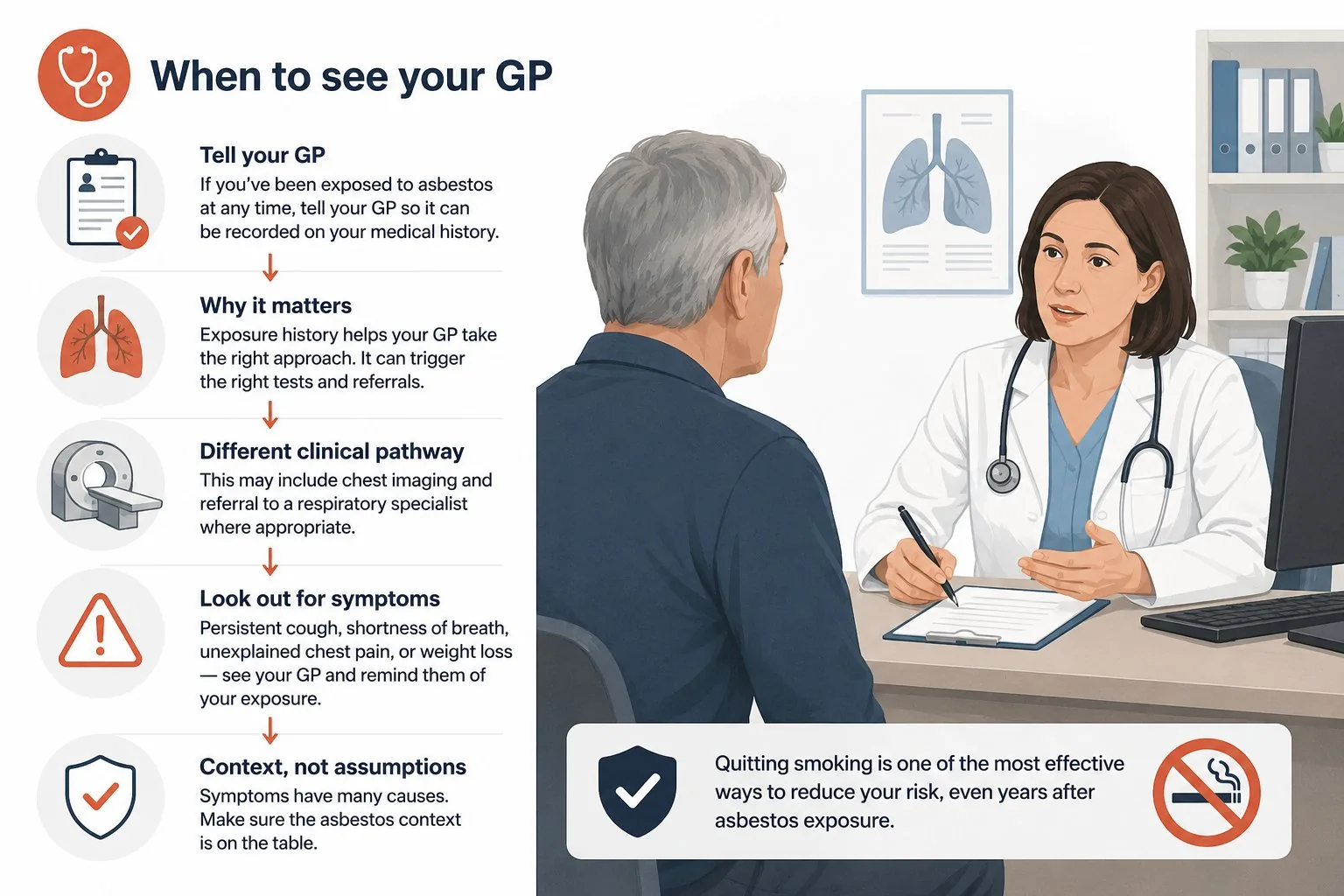
If you've been exposed to asbestos at any point — historically through your work, more recently through an identified disturbance, or in a way you're now uncertain about — the right step is to tell your GP. The exposure should be recorded on your medical history.
This matters more than it might seem. Asbestos-related diseases share symptoms with many commoner conditions. A patient presenting with persistent cough and shortness of breath whose record mentions asbestos exposure gets a different clinical pathway from one whose record doesn't. The exposure history is what triggers the more cautious diagnostic approach, including consideration of chest imaging and referral to a respiratory specialist where appropriate.
If you develop symptoms — particularly persistent cough, shortness of breath, unexplained chest pain, or significant unexplained weight loss — see your GP and remind them of the exposure history. Don't assume mesothelioma; symptoms have many other causes. But do make sure the asbestos context is on the table.
UK compensation pathways
For those diagnosed with asbestos-related disease in the UK, several routes to compensation exist.
Industrial Injuries Disablement Benefit (IIDB) is a state benefit administered by the Department for Work and Pensions for people whose disease was caused by employment. Mesothelioma, asbestosis, asbestos-related lung cancer, and diffuse pleural thickening all qualify (subject to assessment).
The Diffuse Mesothelioma Payment Scheme is a government compensation scheme specifically for mesothelioma sufferers who cannot trace a liable employer or their insurer. It pays a lump sum based on age at diagnosis.
The Pneumoconiosis etc. (Workers' Compensation) Act 1979 provides a lump sum payment for people with certain dust-related diseases including asbestosis and mesothelioma.
Civil claims against former employers are the main route to larger compensation amounts. Specialist asbestos solicitors handle these cases, often on a no-win-no-fee basis. Time limits apply — claims must typically be brought within three years of diagnosis, not within three years of exposure.
For information about pleural plaques compensation, note the England/Wales versus Scotland/Northern Ireland distinction described earlier — the available routes vary by jurisdiction.
Frequently asked questions
Can a single brief exposure cause mesothelioma?
It's biologically possible but statistically rare. Mesothelioma risk is broadly dose-dependent — heavier and longer exposure carries higher risk. A one-off brief exposure in good ventilation is at the low end of the risk spectrum. That said, no exposure is risk-free, and there's no medically validated test that can confirm whether any specific exposure caused or didn't cause a future disease.
How long after exposure do symptoms appear?
For most asbestos diseases, decades. Mesothelioma typically takes 20 to 60 years. Asbestosis 10 to 40 years. Pleural plaques 20 to 30 years. The long latency is one of the defining features of asbestos-related disease.
What are the early signs of asbestos-related disease?
Persistent cough, shortness of breath on exertion, chest pain that doesn't ease, fatigue, unexplained weight loss. These overlap with much commoner conditions, which is why exposure history is important context for your GP.
Is there a test that detects asbestos exposure?
Not directly. There's no blood or breath test that proves prior asbestos exposure. Chest imaging (X-ray, CT) can identify pleural plaques or fibrosis, which are evidence of past exposure, but absence of those findings doesn't rule out exposure.
Can asbestos exposure be reversed?
No. Fibres that have lodged in lung tissue cannot be removed. The body's natural clearance mechanisms can remove some, particularly chrysotile, but a fraction of any inhaled load remains. Treatment focuses on managing disease once it develops, not on undoing the exposure itself.
Does smoking make asbestos exposure more dangerous?
Yes, substantially — for lung cancer specifically. The two risks interact multiplicatively rather than additively. A smoker exposed to asbestos has a far higher lung cancer risk than someone exposed to either alone. Smoking does not appear to influence mesothelioma risk in the same way, but quitting smoking is one of the most effective harm-reduction steps available to someone with asbestos exposure history.
Can I claim compensation in England for pleural plaques?
Not through civil litigation. The House of Lords ruling in Rothwell [2007] established that pleural plaques alone do not entitle a claimant to civil damages in England and Wales. In Scotland and Northern Ireland, dedicated legislation provides compensation routes for pleural plaques.
Is there an NHS screening programme for asbestos-exposed workers?
There's no universal screening programme. People with significant occupational exposure may be offered periodic health checks through occupational health services or specialist respiratory clinics, but routine population-level screening for ex-asbestos workers isn't part of the NHS standard pathway.
If you've been exposed to asbestos and you're working out what to do next, see our practical guide to what to do if you've been exposed to asbestos. For the wider context of how asbestos got into UK buildings in the first place — and why exposure continues to be a current rather than historical issue — our complete guide to asbestos awareness in the UK brings the picture together.
For workers whose ongoing roles bring them into potential contact with asbestos and who need to meet the Regulation 10 training duty, our Asbestos Awareness Course covers the syllabus required under the Control of Asbestos Regulations 2012.
Related guides
- What to do if you've been exposed to asbestos
- The complete guide to asbestos awareness in the UK
- Types of asbestos surveys: management, refurbishment, and demolition explained
Make sure your team can recognise asbestos and work safely around it.
Explore the Asbestos Awareness Course →
Mark writes about workplace health & safety, asbestos awareness and accredited online training for Asbestos Awareness Course, part of Online CPD Academy.