
%201.svg)


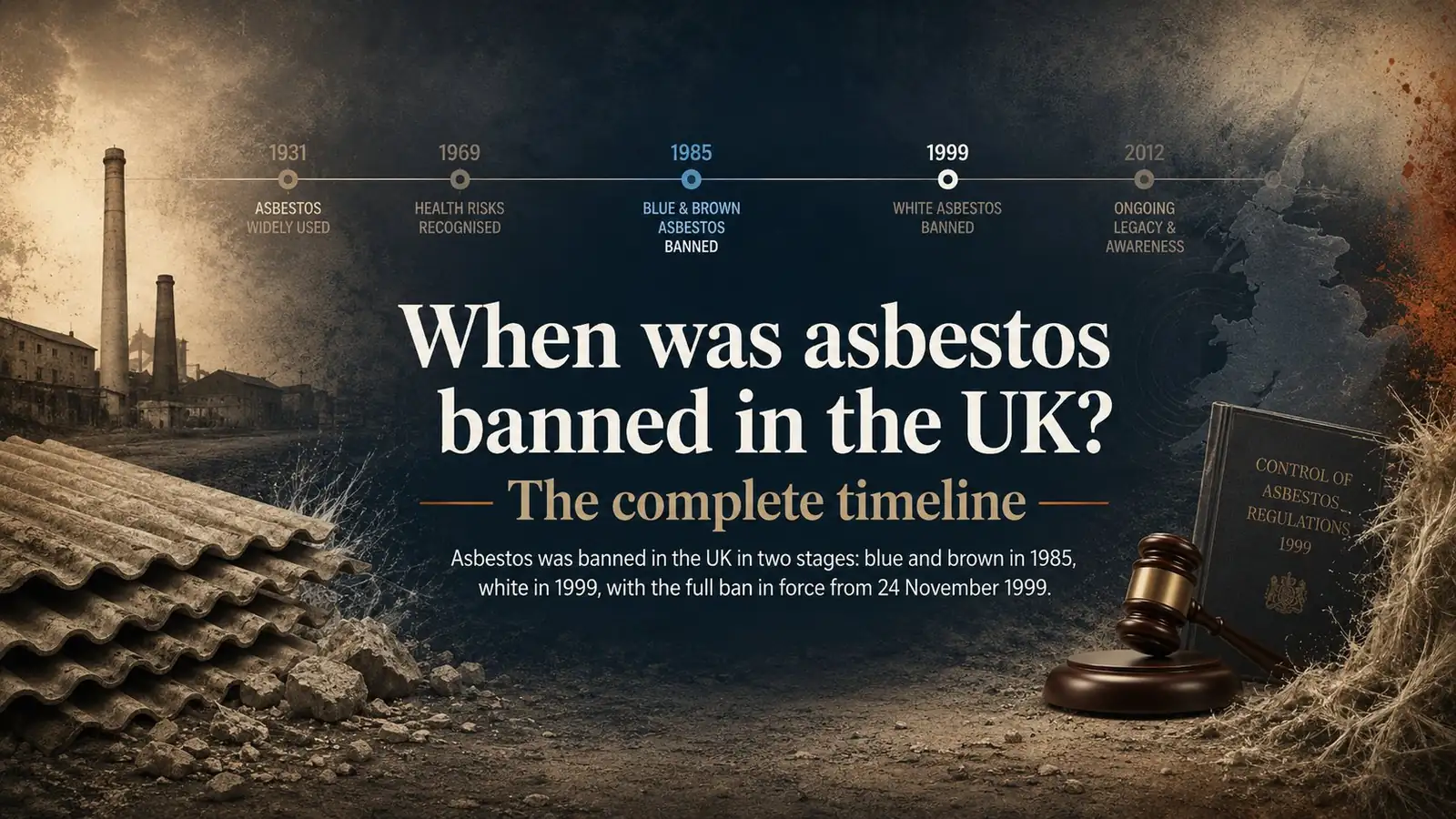
Asbestos was banned in the UK in two stages. Blue and brown asbestos — crocidolite and amosite — were prohibited from import and use in 1985. White asbestos — chrysotile — continued in legal use for another fourteen years before being banned in 1999. The full ban came into force on 24 November 1999. Anything imported, supplied, or installed before that date may still be in place today, which is why the regulations governing asbestos work are concerned almost entirely with buildings constructed or refurbished before 2000.
This guide sets out the legislation by year, explains why the ban happened in stages, and looks at what the dates mean in practice for properties and workers in the UK today.
The full UK asbestos timeline
The British asbestos story is longer than people sometimes assume. Regulation began as early as 1931, when the Asbestos Industry Regulations introduced the first workplace controls following industrial-disease investigations in the 1920s. Through the middle decades of the century, the regulations tightened in stages — exposure limits in 1969, the Asbestos Regulations 1969, the Control of Asbestos at Work Regulations 1987 — but the substance itself remained legal to import and use.

The headline dates you need to know are these:
- 1931 — the Asbestos Industry Regulations introduced workplace dust controls, the first specific UK asbestos legislation.
- 1969 — the Asbestos Regulations 1969 introduced exposure limits and ventilation requirements.
- 1970 — voluntary import ban on crocidolite (blue asbestos) by UK industry.
- 1980 — voluntary withdrawal of amosite (brown asbestos) imports.
- 1985 — the Asbestos (Prohibitions) Regulations 1985 made the import, supply and use of crocidolite and amosite illegal from 1 January 1986.
- 1987 — the Control of Asbestos at Work Regulations 1987 consolidated workplace controls on the asbestos that was still in legal use (chrysotile).
- 1999 — the Asbestos (Prohibitions) (Amendment) Regulations 1999 banned chrysotile, completing the full ban from 24 November.
- 2002 — the Control of Asbestos at Work Regulations 2002 strengthened post-ban management duties.
- 2006 — the Control of Asbestos Regulations 2006 consolidated the various pieces of asbestos law into a single regulatory framework.
- 2012 — the Control of Asbestos Regulations 2012 replaced the 2006 regulations and remain the law in force today.
The 1985 ban: blue and brown asbestos
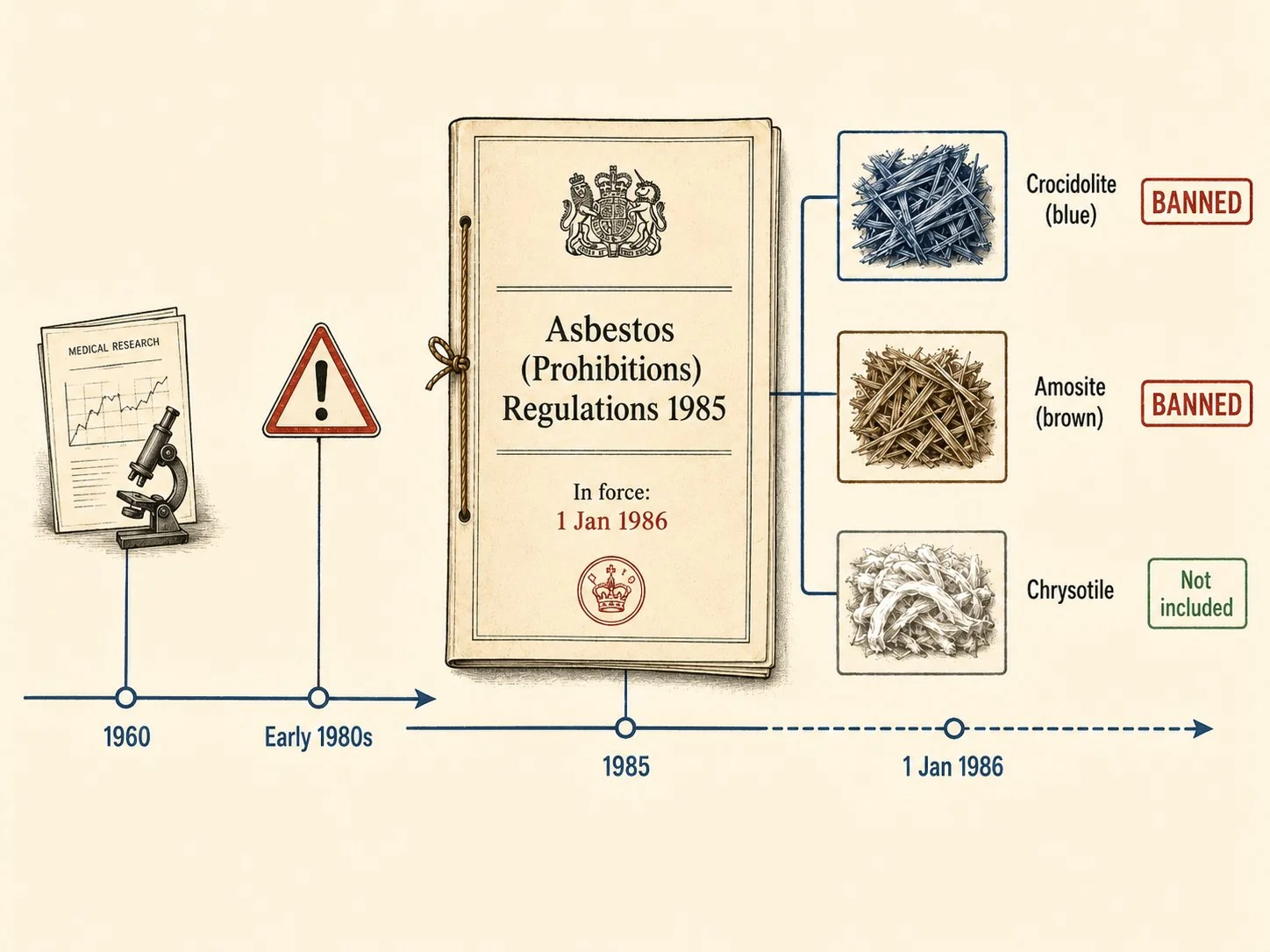
By the early 1980s the disease pattern associated with crocidolite and amosite was unambiguous. Mesothelioma had been linked to crocidolite exposure since Christopher Wagner's 1960 paper on South African asbestos miners, and the latency period meant that workers exposed in the 1950s and 60s were now reaching diagnosis in numbers that could no longer be discounted as anomalous.
The Asbestos (Prohibitions) Regulations 1985, made under the Health and Safety at Work etc Act 1974, banned the import, supply, and use of crocidolite and amosite — and any product containing them — with effect from 1 January 1986. The two amphibole types had been the most clearly carcinogenic in epidemiological terms, and their commercial use had already been declining for a decade through voluntary industry action.
The legislation did not ban chrysotile. The argument made at the time — and pressed hard by the international asbestos industry — was that chrysotile was scientifically distinguishable from the amphiboles, that its curly fibre structure made it less bio-persistent in the lungs, and that "controlled use" was sufficient management. That argument bought chrysotile fourteen more years of legal status in the UK.
The 1999 ban: white asbestos and the full prohibition
Through the 1990s the controlled-use position became harder to defend. Studies continued to link chrysotile exposure to mesothelioma, asbestosis, and lung cancer. The European Commission moved toward a continent-wide ban. Trade-policy disputes — including a challenge by Canada to French chrysotile restrictions at the World Trade Organisation — concentrated minds on the regulatory question.
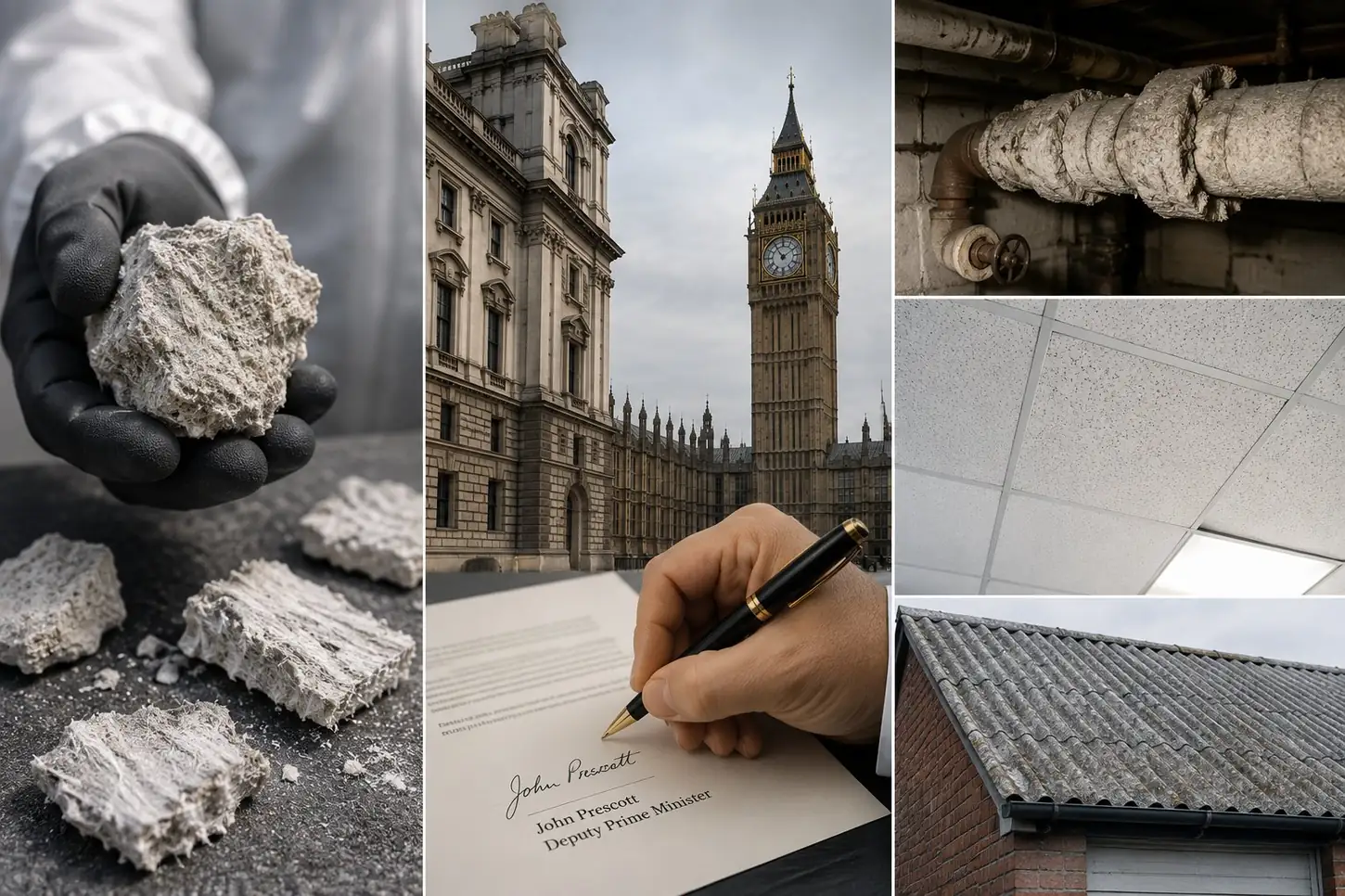
The Asbestos (Prohibitions) (Amendment) Regulations 1999 banned chrysotile and came into force on 24 November 1999. From that date it became illegal to import, supply, or use white asbestos or any new product containing it. The legislation was signed by John Prescott, then Deputy Prime Minister, and put the UK five years ahead of the EU-wide deadline of 2005.
The 1999 amendment did not require existing asbestos materials to be removed. Anything already in place — pipe lagging in a hospital basement, AIB ceiling tiles in an office block, asbestos cement on a garage roof — could remain, provided it was managed safely. That principle still governs UK asbestos law today: identify, presume, register, assess, manage, and only remove where it's appropriate.
Why was the ban so slow?
Two reasons, both worth understanding because they shape how UK buildings ended up the way they did.
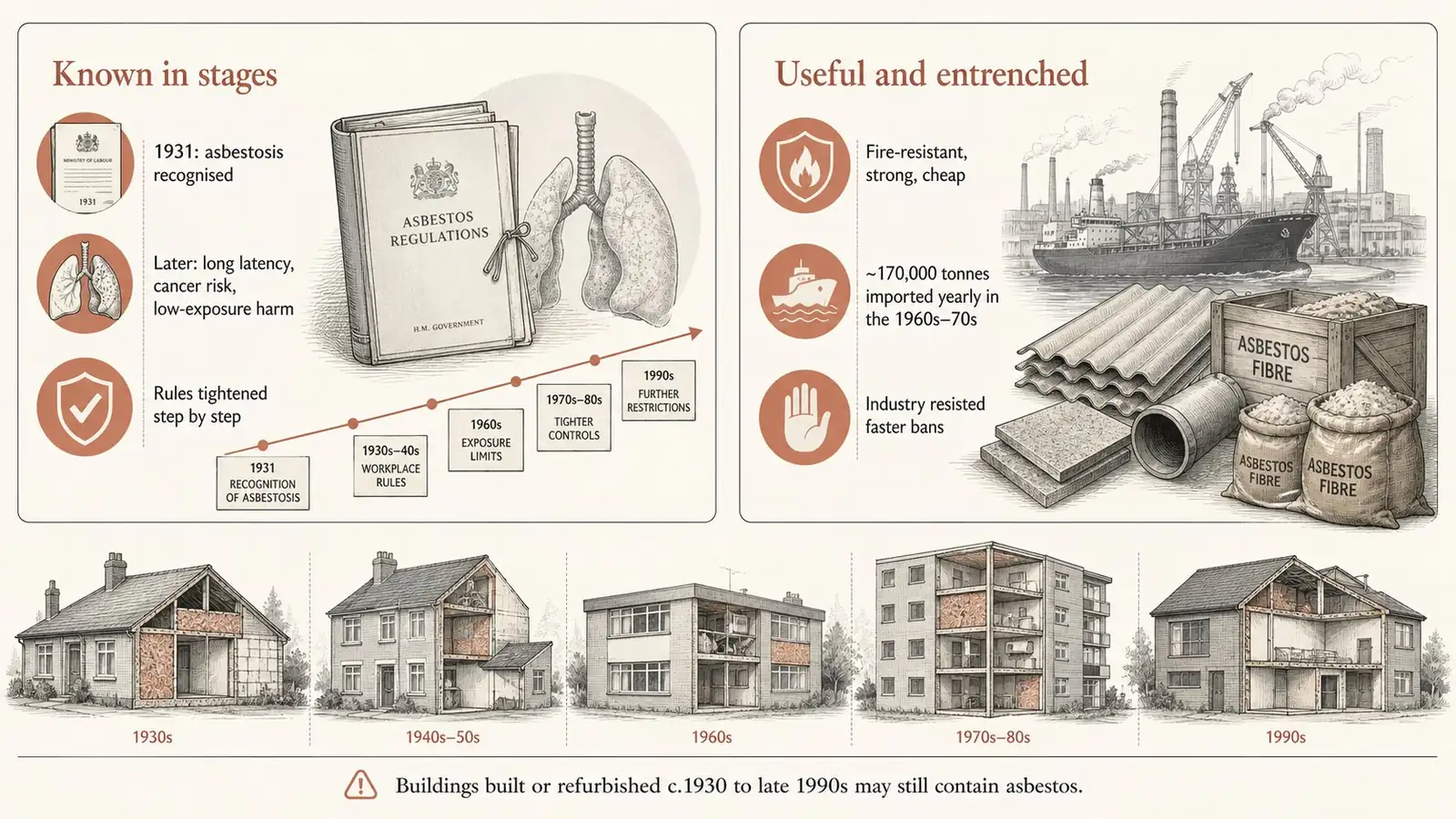
The first is that the dangers of asbestos were known in stages, not all at once. The Asbestos Industry Regulations 1931 followed a Home Office inquiry into asbestosis among textile workers — meaning that by 1931 the UK government already knew asbestos could kill. What wasn't known with certainty until much later was the long latency period for mesothelioma, the carcinogenic effect at lower exposures, and the distinct risks of the different mineral types. Each new piece of evidence triggered a regulatory step rather than an outright ban.
The second is that asbestos was extraordinarily useful as a building material. Fire-resistant, chemically stable, mechanically strong, cheap, and easy to work with. The UK was importing somewhere in the region of 170,000 tonnes a year through the 1960s and 70s for use in construction, shipbuilding, and manufacturing. Replacing it with alternatives took time, and the industry that supplied it lobbied hard against accelerated bans.
The cumulative effect is that anything built or refurbished in the UK between roughly 1930 and the late 1990s could contain asbestos somewhere in its fabric — and a significant proportion of British buildings of that era do.
Why pre-2000 buildings still matter
The single most important practical consequence of the 1999 ban is the dividing line it created in the UK building stock. Anything built or substantially refurbished from 2000 onwards should be free of new asbestos materials. Anything before that date may contain asbestos somewhere, and the duties under the Control of Asbestos Regulations 2012 reflect that.
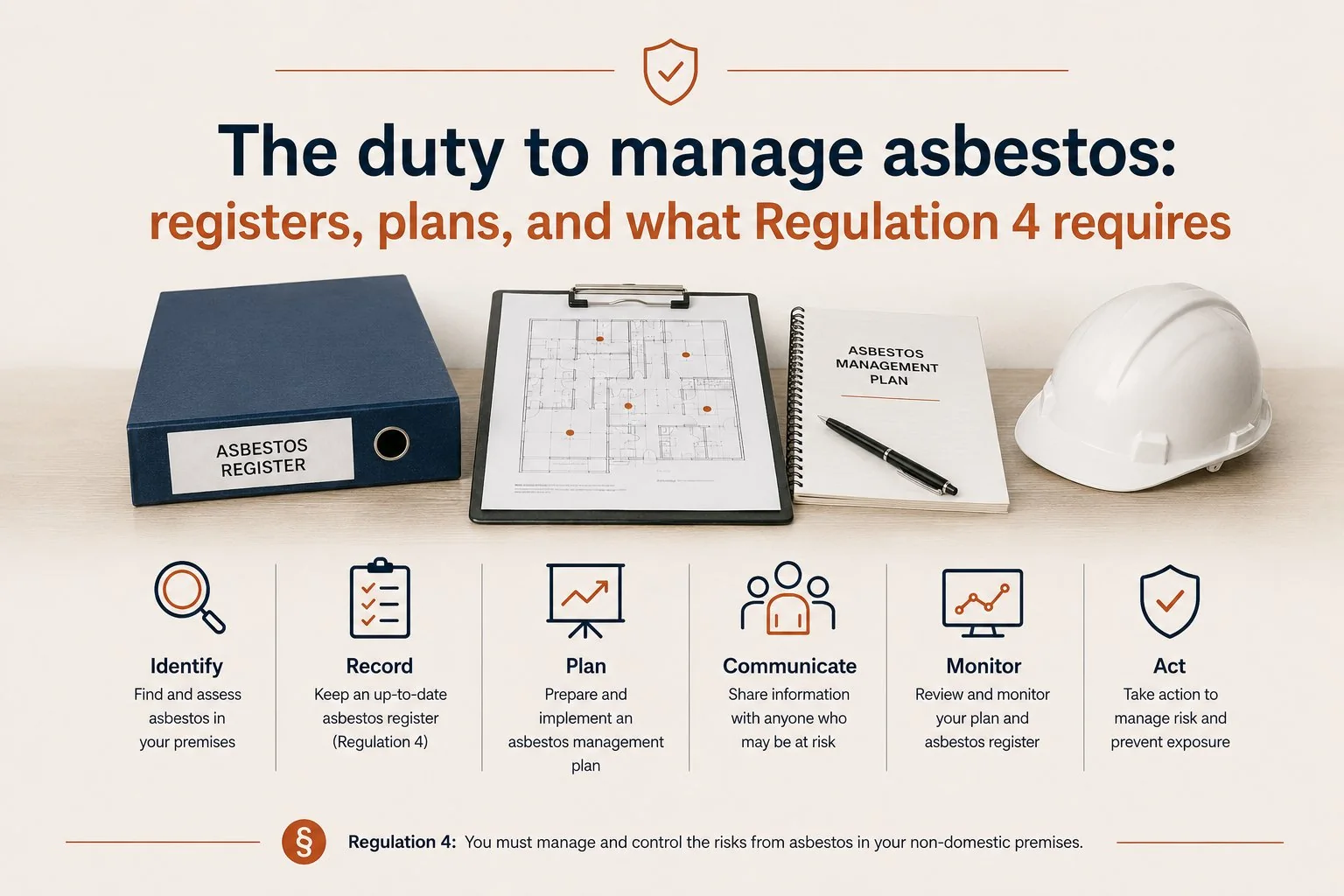
The HSE's working position is that materials in pre-2000 buildings must be presumed to contain asbestos unless evidence shows otherwise. That presumption sits at the heart of the duty to manage in Regulation 4, the identification duty in Regulation 5, and the training duty in Regulation 10. It's also why surveys, registers, and management plans are part of the routine compliance picture for owners and occupiers of older non-domestic premises.
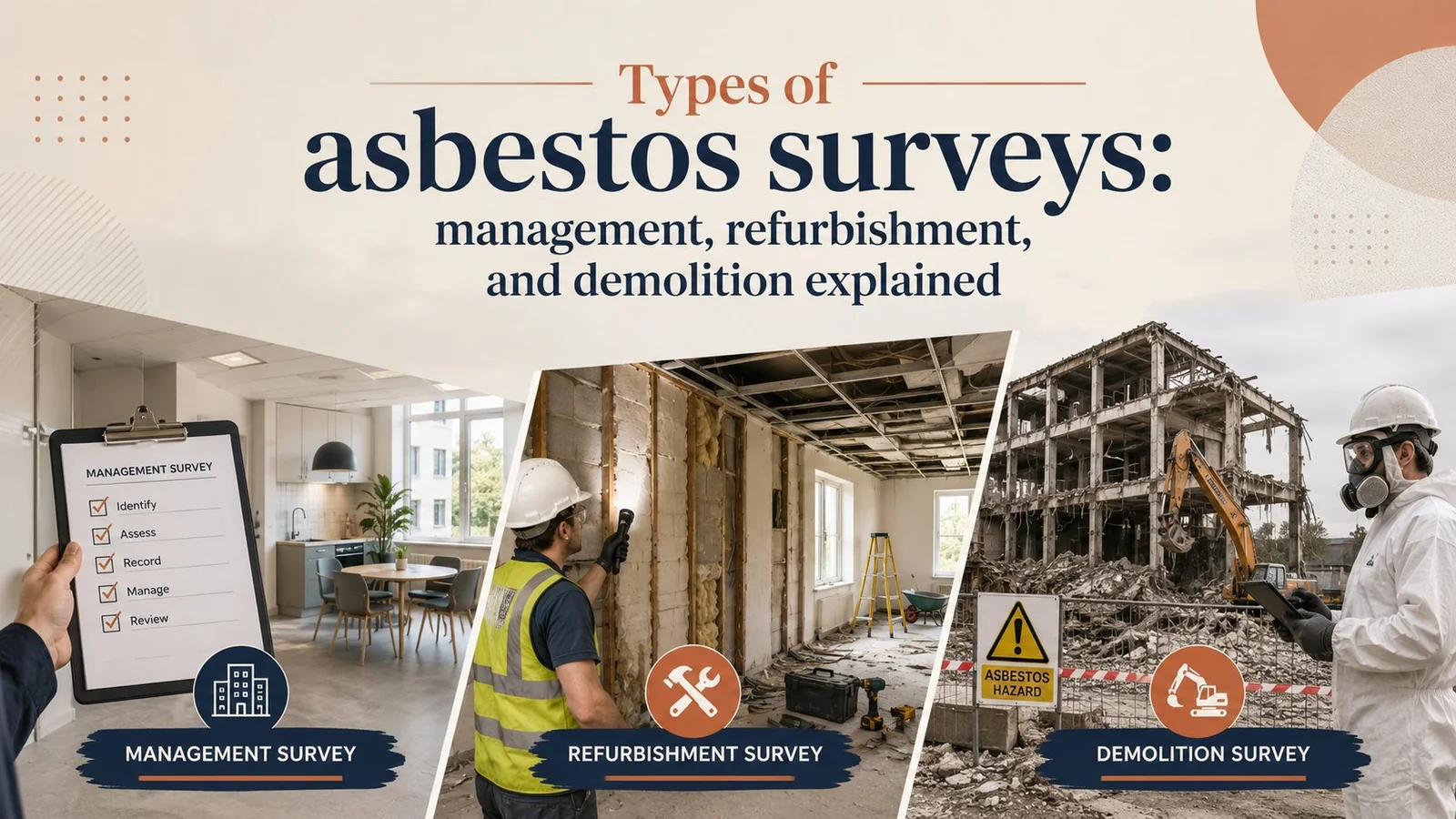
You can read more about how these duties work in our guide to the Control of Asbestos Regulations 2012 and the duty to manage asbestos.
Where asbestos is still legal in 2026
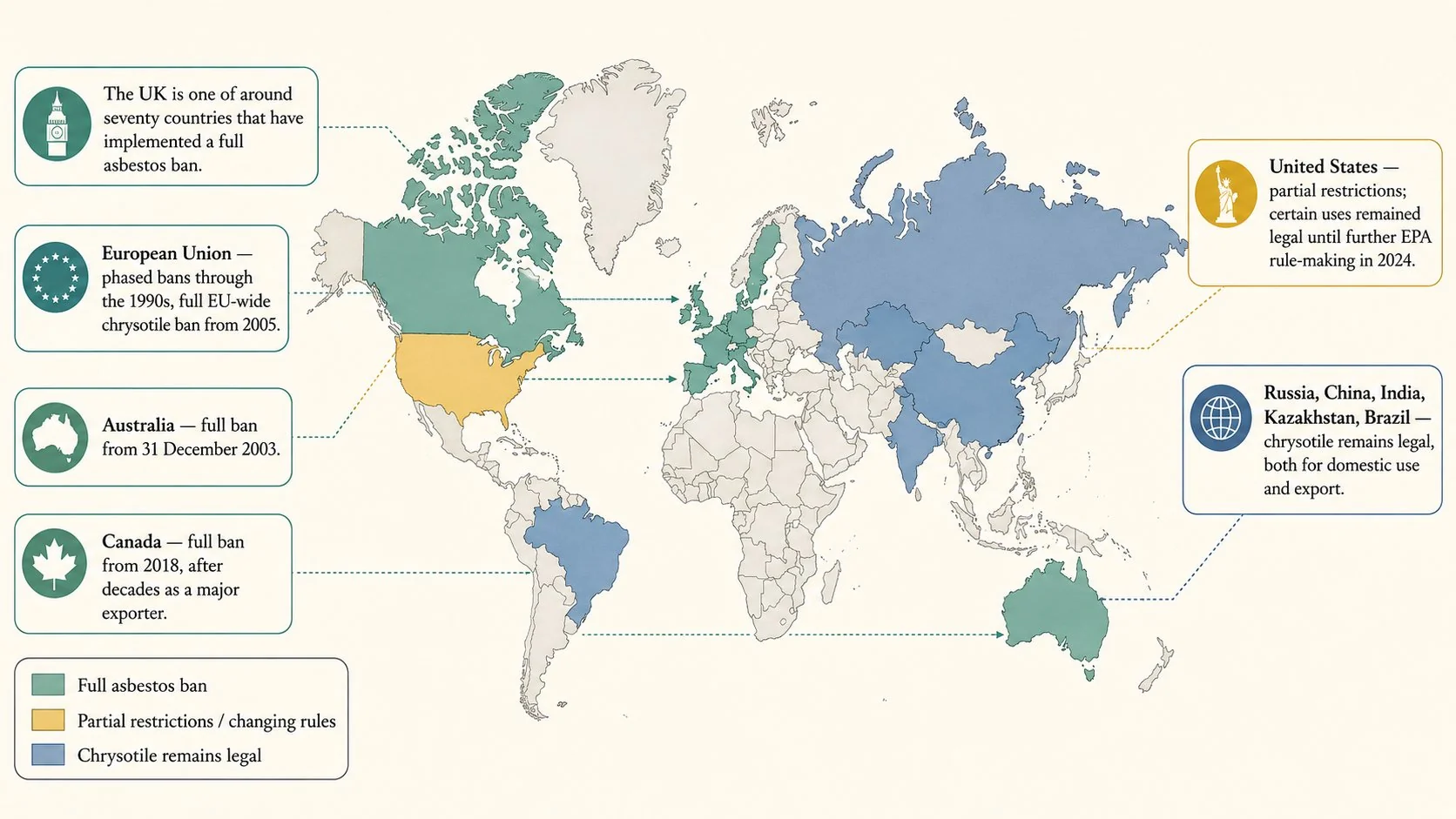
The UK is one of around seventy countries that have implemented a full asbestos ban. A few key dates worth knowing about for context:
- European Union — phased bans through the 1990s, full EU-wide chrysotile ban from 2005.
- Australia — full ban from 31 December 2003.
- Canada — full ban from 2018, after decades as a major exporter.
- United States — partial restrictions; certain uses remained legal until further EPA rule-making in 2024.
- Russia, China, India, Kazakhstan, Brazil — chrysotile remains legal, both for domestic use and export.
Asbestos continues to be mined and used commercially in around twenty countries. Most UK imports of asbestos-containing goods are now blocked at the border, but trace contamination has been found in occasional consumer products imported from countries where the substance is still in use — talc-based cosmetics, children's toys, automotive parts — and surveillance continues.
Frequently asked questions
Was asbestos banned in the UK in 1999 or 2000?
24 November 1999 is the correct date. Some sources round up to "2000" as a cut-off for practical purposes (anything installed before the year 2000 is treated as potentially asbestos-containing), but the formal ban took effect on the November date.
Was asbestos banned in 1985 or 1999?
Both, in stages. Blue and brown asbestos in 1985; white asbestos in 1999. The 1999 amendment is what completed the prohibition.
Why was white asbestos legal until 1999 when blue and brown were banned in 1985?
The argument at the time was that chrysotile's curly fibre structure made it less bio-persistent and therefore less hazardous than the amphibole types. That distinction was contested at the time and has been largely abandoned since — the IARC classifies all six asbestos minerals as Group 1 carcinogens, and the HSE position is that all types are hazardous.
Is asbestos still legal anywhere?
Yes. Russia is the largest current producer, and chrysotile is still legally mined and used in around twenty countries. The UK ban prohibits import and supply within the UK, including the import of new products containing asbestos.
When was the EU-wide asbestos ban?
The EU implemented a full chrysotile ban from 1 January 2005, with member states required to transpose it. The UK was already ahead of that deadline by virtue of the 1999 amendment.
Could a house built in 1995 contain asbestos?
Yes. Chrysotile was still legally being installed in UK construction in 1995. Anything built or refurbished before 24 November 1999 should be treated as potentially containing asbestos until shown otherwise.
Are there any exemptions to the 1999 ban?
The 1999 regulations included a small number of time-limited derogations for specialist industrial uses — electrolytic cell diaphragms, certain hydroelectric turbine seals — most of which have since expired. There is no general consumer or construction exemption.
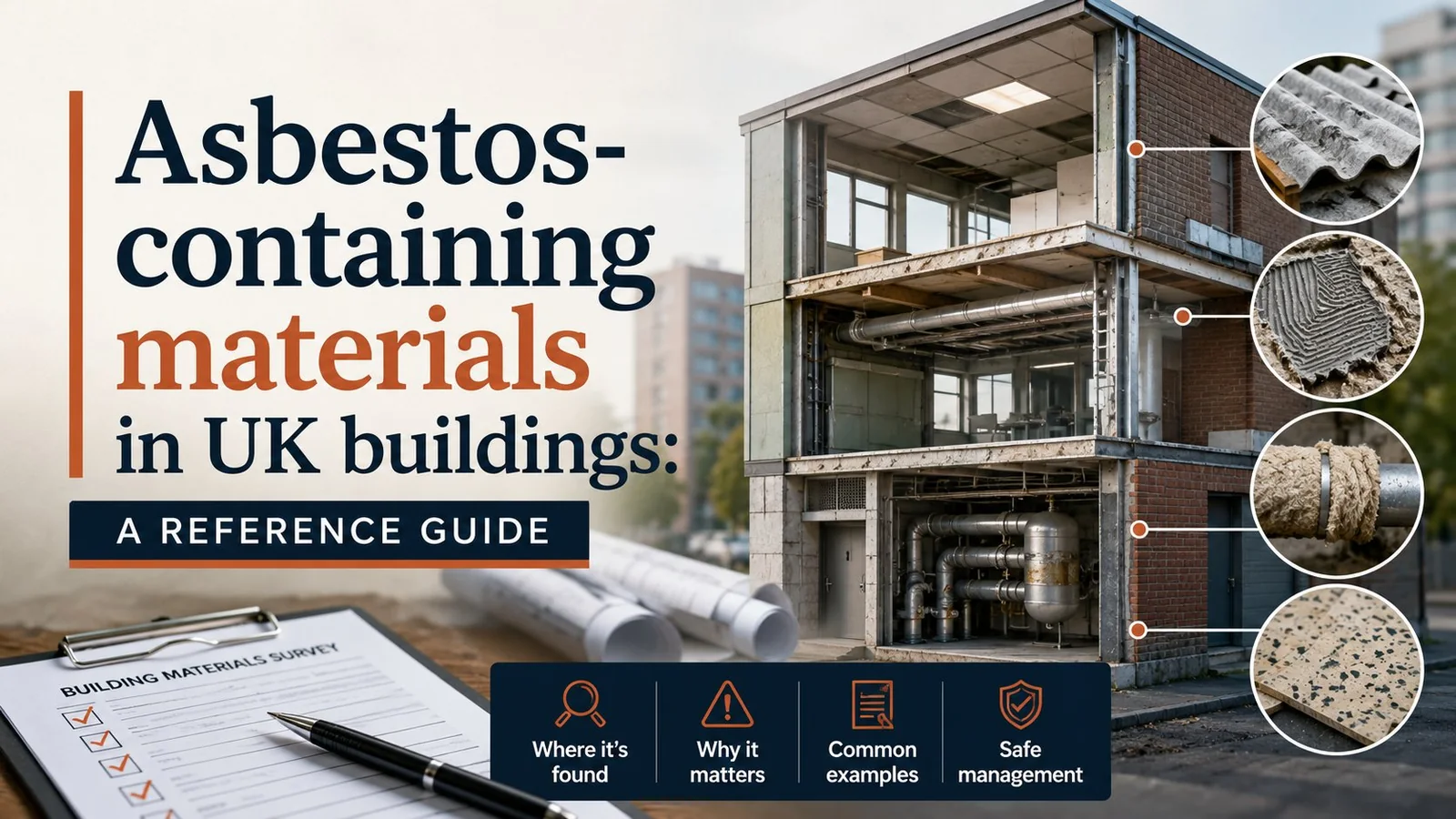
For more on the materials these regulations were created to control, see our reference guide to asbestos-containing materials in UK buildings and our practical guide to recognising asbestos. For workers in the construction and maintenance trades whose work could foreseeably disturb asbestos in a pre-2000 building, training is mandatory under Regulation 10 — our Asbestos Awareness Course covers the syllabus required.